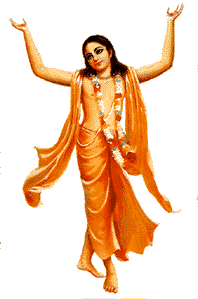
Çré Gauräìga-Lélä-Smaraëa-Maìgala-Stotram
Auspicious Verses for Remembering Lord Gauräìga’s Pastimes
by Sréla Bhaktivinoda Öhäkura
Auspicious Verses for Remembering Lord Gauräìga’s Pastimes
by Sréla Bhaktivinoda Öhäkura
rähu-graste jaòa-çaçadhare—on the lunar eclipse; phälgune—in the month of hälguna (February–March); pürëimäyäm—on the full-moon day; gauòe—in Bengal; çäke—in the Çäka era; manuçatamite sapta-varçädhike—in the 1407 (answering to the 8th of February 1486 of the Christian era); yaù—who; mäyäpüryäm—in Mäyäpura; samajani—was born; çacé—of Çrématé Çacé-devé; garbha—of the womb; sindhau—in the ocean; pradoñe—in the evening just after sunset; tam—to Him; cit—transcendental; çakti—by the potency; prakaöita—manifested; tanum—body; miçra—of Jagannätha Miçra; sünum—the transcendental Son; smarämi—I meditate.
In the town of Mäyäpur in Bengal, just after sunset on the evening of the 23rd Phalguna 1407 Sakabda, (answering to the 18th February 1486 of the Christian era), Lord Caitanya Mahäprabhu took birth as the son of Jagannätha Miçra from the ocean of Çrématé Çacé-devé’s womb. I meditate on that Lord Caitanya, whose spiritual forttm is manifested by His own cit potency.
VERSE 2
viçvambhara-prabhu-hari-dvija-gauracandra-
nimbeça-näma-nicayaù
kramato babhüva
yasyärya-khaëòa-mukuöopama-gauòa-räñöre
gauraà smarämi
satataà kali-pävanaà tam
viçvambhara—Viçvambhara; prabhu—Prabhu; hari—Hari; dvija—Dvija; gauracandra—Gauracandra; nimba—Nimäi; éça—Éça; näma—of names; nicayaù—multitude; kramataù—one after another; babhüva—became; yasya—of whom; ärya-khaëòa—of the pious land of India; mukuöa—the crown; upama—compared to; gauòa-räñöre—the land of Bengal; gauram—Lord Caitanya Mahäprabhu; smarämi—I meditate; satatam—continually; kali—the Kali-yuga; pävanam—the purifier; tam—Him.
(Growing up in) Bengal, which is like the crown of the pious land of India, Lord Caitanya became known by tttmany different names, such as Vviçvambhara, Prabhu, Hari, Dvija, Gauracandra, Nimäi, and Éça. I continuously meditate upon that Lord, who purifies the Age of Kali.
VERSE 3
aìgé-kurvan nija-sukha-karéà
rädhikä-bhäva-kantià
miçräväse
sulalita-vapur gaura-varëo harir yaù
pallé-stréëäà
sukham abhidadhat khelayäm äsa bälye
vande ‘haà taà
kanaka-vapuçaà präìgne riìgamänam
aìgé-kurvan—accepting; nija—own; sukha—happiness; karém—giving; rädhikä—of Çrématé Rädhäräëé; bhäva—of the love; käntim—the splendor; miçra—of Jagannätha Miçra; äväse—in the home; su—very; lalita—charming and playful; vapuù—form; gaura—golden; varëaù—color; hariù—the Supreme Personality of Godhead, Lord Hari; yaù—who; palli—of the village; stréëäm—of the ladies; sukham—happiness; abhidadhat—placed; khelayäm äsa—played; bälye—in His childhood; vande—offer respectful obeisances; aham—I; tam—unto Him; kanaka—golden; vapuçam—form; präìgane—in the courtyard; riìgamänam—crawling.
The Supreme Personality of Godhead, Lord Hari, accepted the luster of the ecstatic love offered to Him by Çrématé Rädhäräëé, which caused Him such great delight. In this way the Lord assumed a beautiful and charming form with a complexion as brilliant as gold. As a small child playing and crawling about the courtyard of Jagannätha Miçra’s house, that Lord Hari delighted the ladies of the neighborhood. I offer my respectful obeisances to that golden Lord Hari.
VERSE 4
sarpäkåtià sväìganaà
hy anantaà
kåtväsanaà
yas tarasopaviñöaù
tatyäja taà cätmajanänurodhäd
viçvämbharaà
taà praëamämi nityam
sarpa—of a serpent; äkåtim—form; sva—own; aìganam—courtyard; hi—certainly; anantam—Lord Anantadeva; kåtvä äsanam—sitting; yaù—who; tarasä—quickly; upaviñöaù—seated; tatyäja—abandoned; tam—him; ca—and; ätmajana—of the relatives; anurodhät—because of consideration (or because of the appeals); viçvambharam—to that Lord Viçvambhara; tam—to Him; praëamämi—I offer my respectful obeisances; nityam—repeatedly.
When Lord Anantadeva assumed the form of an ordinary snake and entered [Jagannätha Miçra’s] courtyard, young Viçvambhara immediately began to play with Him. When the distressed relatives appealed to Him, Viçvambhara went away from the snake. I repeatedly offer my respectful obeisances to that Lord Viçvambhara.
VERSE 5
bälye çåëvan vada-harim
iti krandanäd yo nivåttas
tasmät stréëäà
sakala-viçaye näma-gänaà tadäsét
mätre jïänaà viçadam
avadan måttikäbhakçaëe yo
vande gauraà kali-mala-haraà
näma-gänäçrayaà tam
bälye—in childhood; çåëvan—hearing; vada—please speak; harim—the name of Lord Hari; iti—thus; krandanät—from crying; yaù—who; nivåttaù—stopped; tasmät—on that account; stréëäm—of the ladies; sakala—entire; viçaye—in the circle; näma—of the Holy Names; gänam—singing; tadä—then; äsét—was; mätre—to His mother; jïänam—transcendental knowledge; viçadam—pure and splendid; avadat—spoke; måttikä—of clay; bhakñaëe—in the eating; yaù—who; vande—I offer my respectful obeisances; gauram—unto that Lord Gaurasundara; kali—of the Age of Kali; mala—impurities; haram—removing; näma—of the Holy names; gäna—chanting; äçrayam—shelter; tam—Him.
When in His childhood He heard the words “Say the name of Lord Hari,” He would immediately stop crying. In this way the ladies of the village would continually sing the Holy Names of the Lord. When He had eaten clay, He spoke splendid and pure philosophy of real spiritual life to His mother. I offer my respectful obeisances to that Lord Gaurasundara, who became the shelter of the chanting of the Holy Names and thus removed the impurities of the Age of Kali.
VERSE 6
paugaëòädau dvija-gaëa-gåhe
cäpalaà yo vitanvan
vidyärämbhe çiçu-parivåto
jähnavé-snäna-käle
väri-kñepair dvija-kula-patén
cälayäm äsa sarväàs
taà gauräìgaà
parama-capalaà kautukéçaà smarämi
paugaëòa—of boyhood; ädau—in the beginning; dvija—of the brähmaëas; gaëa—of the community; gåhe—in the house; cäpalam—pranks; yaù—who; vitanvan—performing; vidyä—of education; ärambhe—at the beginning; çiçu—by the boys; parivåtaù—accompanied; jähnavé—in the Ganges; snäna—of bathing; käle—at the time; väri—of water; kñepaiù—with sprinkling; dvija—of brähmaëas; kula—of the community; patén—the leaders; cälayäm äsa—agitated and caused to flee; sarvän—all; tam—to Him; gauräìgam—Lord Gauräìga; parama—supremely; capalam—mischeivous; kautuké—of those jubilantly fond of performing pranks; éçam—the master; smarämi—I meditate.
In the beginning of His boyhood Lord Gauräìga performed childish pranks in the homes of the brähmaëas. On the day of His first schooling, accompanied by His boyhood friends, He went to the Ganges at the time of bathing and splashed water on the leaders of the brähmaëas, agitating them and causing them to flee. I meditated on that Lord Gauräìga, the supreme prankster and the monarch of all playful boys.
VERSE 7
tértha-bhrämi-dvija-kula-maëer
bhakçayan pakvam annaà
paçcät taà
yo vipula-kåpayä jëäpayäm äsa tattvam
skandhäroha-cchala-bahutayä mohayäm
äsa caurau
vande ‘haà taà
sujana-sukhadaà daëòadaà durjanänäm
tértha—to places of pilgrimage; bhrämi—wandering; dvija—of brähmaëas; kula—of the community; maëeù—of the jewel; bhakñayan—eating; pakvam—cooked; annam—rice; paçcät—afterwards; tam—to him; yaù—who; vipula—great; kåpayä—with mercy; jïäpayäm äsa—informed; tattvam—spiritual truth of His actual identity; skandha—on the shoulders; äroha—ascended; chala—of tricks; bahutayä—with an abundance; mohayäm äsa—bewildered; carau—two thieves; vande—offer respectful obeisances; aham—I; tam—to Him; su-jana—to the pious devotees; sukhadam—giving; happiness; daëòadam—giving punishment; durjanänäm—to the impious.
Young Lord Caitanya ate the rice cooked (by a guest) who was like the jewel among the brähmaëas traveling to places of pilgrimage. Afterwards, the Lord mercifully revealed the truth of His actual spiritual identity to that brähmaëa. Carried away on the shoulders by two thieves, the young Lord bewildered them with His illusory potency. I offer my respectful obeisances to that Lord Caitanya Mahäprabhu, who delights the pious devotees and punishes the impious.
VERSE 8
äruhya påñöhaà
çiva-bhakta-bhikñoù
saìkértya
rudrasya guëänuvädam
reme mahänandamayo ya éças
taà bhakta-bhaktaà
praëamämi gauram
äruhya—ascending; påñöham—on the back; çiva—of Lord Çiva; bhakta—of a devotee; bhikñoù—of a mendicant; saìkértya—glorifying; rudrasya—of Lord Çiva; guëa—of the transcendental qualities; anuvädam—explanation; reme—performed pastimes; mahä-änanda-mayaù—greatly blissful; yaù—who; éçaù—the Supreme Personality of Godhead; tam—to Him; bhakta—of His devotees; bhaktam—a devotee; praëamämi—I offer my respectful obeisances; gauram—to Lord Gaurasundara.
Climbing on the back of a mendicant devotee of Lord Çiva, young Lord Gauräìga glorified Lord Çiva’s transcendental qualities. The young Lord became blissful by performing these pastimes. I offer my respectful obeisances unto that Lord Gauräìga the Supreme Personality of Godhead, who is a devotee of His devotees.
VERSE 9
lakñmé-devyäù praëaya-vihitaà
miñöam annaà gåhétvä
tasyai prädad varam
ati-çubhaà citta-santoçaëaà yaù
masyäç cihnair nija-parijanän
toçayäm äsa yaç ca
taà gauräìgaà
parama-rasikaà citta-cauraà smarämi
lakñmé-devyäù—of Çrématé Lakñmé-devé; praëaya—with love; vihitam—offered; miñöam annam—sweets; gåhétvä—accepting; tasyai—to her; prädat—gave; varam—benediction; ati—greatly; çubham—auspicious; citta—the heart; santoçaëam—pleasing; yaù—who; masyäù—of ink; cihnaiù—with the marks; nija—own; parijanän—relatives; toñayäm äsa—satisfied; yaù—who; ca—and; tam—Him; gauräìgam—Lord Gauräìga; parama—supreme; rasikam—of those who relish the mellows of transcendental pastimes; citta—the mind; cauram—the thief; smarämi—I meditate.
[One day, instead of going to school, young Lord Gauräìga met the young girl,] Çrématé Lakñmé-devé. Accepting the sweets lovingly offered by her, He offered her an auspicious benediction that greatly pleased her heart. [Later, in order to prove that He had actually gone to school,] He covered His hands with ink marks, and in this way satisfied His relatives. I meditate on that Lord Gauräìga, the supreme enjoyer of transcendental mellows who has completely enchanted my mind.
VERSE 10
ucchiñöa-bhaëòeçu
vasan varäìgo
mätre dadau jïänam
anuttamaà yaù
advaita-véthé-pathikair upäsyaà
taà gauracandraà
praëamämi nityam
ucchiñöa—rejected; bhaëòeçu—on the cooking pots; vasan—staying; vara—beautiful; aìgaù—limbs; mätre—to His mother; dadau—gave; jïänam—transcendental knowledge; anuttamam—incomparable; yaù—who; advaita—of impersonalist philosophy; véthé—on the paths; pathikaiù—by the travelers; upäsyam—worshipable; tam—to Him; gauracandram—Lord Gauracandra; praëamämi—I offer my respectful obeisances; nityam—repeatedly.
One day, handsome young Lord Gauracandra sat on rejected cooking pots, [and when His mother chastised Him for it, He replied by] speaking incomparable transcendental philosophy. I repeatedly offer my respectful obeisances to that Lord Gauracandra, the supreme object of worship for those who travel on the path of impersonal philosophy.
VERSE 11
dåñövä tu mätuù
kadanaà sva-loñöais
tasyai dadau dve sita-närikele
vätsalya-bhaktyä sahasä çiçur
yas
taà mätå-bhaktaà
praëamämi nityam
dåñövä—having seen; tu—certainly; mätuù—of His mother; kadanam—suffering; sva—own; loñöaiù—with disease; tasyai—to her; dadau—gave; dve—two; sita—white; närikele—coconuts; vätsalya—filial; bhaktyä—with devotion; sahasä—immediately; çiçuù—child; yaù—who; tam—to Him; mätå—to His mother; bhaktam—devoted; praëamämi—I offer my respectful obeisances; nityam—eternally.
Seeing His mother suffering with a grave disease, young Lord Gauräìga, full of a son’s love, quickly brought her two white coconuts [for medicine]. I repeatedly offer my respctful obeisances to Lord Gauräìga, who is His mother’s devotee.
VERSE 12
sannyäsärthaà gatavati gåhäd
agraje viçvarüpe
miñöäläpair
vyathita-janakaà toçayäm äsa türëam
mätuù çokaà pitari
vigate säntvayäm äsa yaç ca
taà gauräìgaà
parama-sukhadaà mätå-bhaktaà smarämi
sannyäsa—of accepting sannyäsa (the renouced order of life; artham—for the purpose; gatavati—left; gåhät—from the home; agraje—elder brother; viçvarüpe—Viçvarüpa; miñöa—sweet; äläpaiù—with words; vyathita—distressed; janakam—father; toñayäm äsa—satisfied; türëam—quickly; mätuù—of His mother; çokam—grief; pitari—when His father; vigate—had departed; säntvayäm äsa—consoled; yaù—who; ca—and; tam—Him; gauräìgaà—Lord Gauräìga; parama—supreme; sukhadam—granting happiness; mätå—to His mother; bhaktam—devoted; smarämi—I meditate.
When His elder brother, Viçvarüpa, left the house to take sannyäsa, Lord Gauräìga quickly satisfied His grief-stricken father by speaking sweet words, and when His father died the Lord consoled His grieving mother. I meditate on pleasing Lord Gauräìga, who is His mother’s devotee.
VERSE 13
lakçmé-devéà praëaya-vidhinä
vallabhäcärya-kanyäà
aìgé-kurvan gåha-makha-paraù
pürva-deçaà jafäma
vidyäläpair bahu-dhanam atho präpa
yaù çästra-våttis
taà gauräìgam gåha-pati-varaà
dharma-mürtià smarämi
lakçmé-devém—Lakçmé-devé; praëaya-vidhinä—with the sacred rites of marriage; vallabhäcärya—of Vallabhäcärya; kanyäm—the daughter; aìgé-kurvan—accepting; gåha-makha—to household duties; paraù—devoted; pürva—eastern; deçam-country; jagäma—travelled; vidyä-äläpaiù—with learned lectures; bahu—great; dhanam—wealth; athau—then; präpa—attained; yaù—who; çästra—explaining the scriptures; våttiù—accepting as a livelihood; tam—Him; gauräìgaà—Lord Gauräìga; gåha-pati—of husbands; varam—the best; dharma—of religion; mürtim—the personification; smarämi—I meditate.
Following the sacred rites of marriage, He accepted Çrématé Lakçmé-devé, the daughter of Vallabhäcärya, and devotedly fulfilled His duties as a householder. A professional scholar, He traveled to East Bengal, and earned great wealth by lecturing. I meditate upon that Lord Gauräìga, the best of husbands and the form of religion.
VERSE 14
väräëasyäà sujana-tapanaà
saìgamayya sva-deçaà
labdhvä lakçmé-viraha-vaçataù
çoka-taptäà prasütim
tattväläpaiù sukhada-vacanaiù
säntvayäm äsa yo vai
taà gauräìgaà virati-sukhadaà
çänta-mürtià smarämi
väräëasyäm—in Väräëasé; sujana—pious devotee; tapanam—Tapana Miçra; saìgamayya—caused to travel; sva—own; deçam—country; labdhvä—obtaining; lakçmé—from Çrématé Lakçmé-devé; viraha—of the separation; vaçataù—under the influence; çoka-with grief; taptam—burning; prasütim—mother; tattva—with of the truth of spiritual life; äläpaiù—with sords; sukha—happiness; da—granting; vacanaiù—with words; sukha—happiness; da—granting; vacanaiù—with words; säntvayäm äsa—consoled; yaù—who; vai—certainly; tam—Him; gauräìgaà—Lord Gauräìga; virati—of renunciation; sukha—the happiness; dam—granting; çänta—peaceful; mürtim—form; smarämi—I meditate.
Lord Gauräìga met Tapana Miçra in Benares. Returning home, to find His mother mourning Lakçmé-devé’s death He consoled her with pleasing words describing the spiritual truth. I meditate on tranquil Lord Gauräìga, who gives the happiness of renunciation.
VERSE 15
mätur väkyät pariëaya vidhau
präpa viçëupriyäà yo
gaìgä-tére parikara-janair
dig-jito darpa-häré
reme vidvaj-jana-kula-maëiù çré-navadvépacandro
vande ‘haà taà sakala-viçaye
siàham adhyäpakänäm
mätuù—of His mother; väkyät—because of the word; pariëaya—vidhau—in marriage; präpa—obtained; viçëupriyäm—Çrématé Viçëupriyä-devé; yaù—who; gaìgä—of the Ganges; tére—on the shore; parikara-janaiù—with His followers; dik-jitaù—of Keçava Kaçméré, who had conquered all directions; darpa—the pride; häré—removing; reme—jibilantly performed pastimes; vidvat-jana—of learned scholars; kula-of the community; maëiù—the jewel; çré-navadvépa-candraù—Lord Caitanya Mahäprabhu, the transcendental moon of Navadvépa; vande—offer my respectful obeisances; ahan—I; tam—to Him; sakala-viçaye—in all circles; siàham—the lion; adhyäpakänäm—of scholars;
At His mother’s request, He married Çrématé Viçëupriyä-devé. On the bank of the Ganges with His many disciples, He cut down the pride of Keçava Kaçméré, who had formerly conquered all directions. The jewel of learned scholars and the moon of Navadvipa, He enjoyed many pastimes. I offer my respectful obeisances to Him, the lion among the scholars.
VERSE 16
vidyä-viläsair nava-khaëòa-madhye
sarvän dvijän yo viraräja
jitvä
smartäàç ca naiyäyika-täntrikäàs
ca
tam jïäna-rüpaà praëamämi
gauram
vidyä—of learning; viläsaiù—with pastimes; nava-khaëòa-madhye—in Navadvépa; sarvän—all; dvijän—the learned brähmaëas; yaù—who; viraräja—appeared very splendid; jitvä—having cinquered; smartän—the smartas; ca—and; naiyäyika—followers of the nyaya philosophy; täntrikän—followers of the Tantras; ca—and; tam—the Him; jïäna—of knowledge; rüpan—the personification; praëamämi—I offer my respectful obeisances; gauram—to Lord Gauracandra.
With playful logic defeating all brähmaëa smartas, naryäyikas, and täntrikas, He shone with great splendor. I offer my respectful obeisances to Lord Gaura, the form of transcendental knowledge.
VERSE 17
vipra-padodakaà pétvä
yo babhüva gatämayaù
varëäçramäcara-pälaà
taà smarämi mahäprabhum
vipra—of a brähmaëa; päda—from the feet; udakam—water; pétvä—having drunk; yaù—who; babhüva—became; gata—gone; ämayaù—disease; varëa-äçrama—of the varëäçrama-system; äcara—the duties; pälam—the protector; tam—Him; smarämi—I meditate; mahäprabhum—Lord Caitanya Mahäprabhu.
He became cured of disease by drinking the water of a brähmaëas foot, I meidtate on Lord Caitanya Mahäprabhu, the protector of varëäçrama.
VERSE 18
preta-kçetre dvija-parivåtaù
sarva-deva-praëamyo
mantraà lebhe nija-guru-parivaktrato
yo daçärëam
gauòaà labdhvä svam ati-vikåti-cchadmanoväca
tattvaà
taà gauräìgaà nava-rasapparaà
bhakta-mürtià smarämi
preta-kçetre—in the city of Bayä; dvija—by brähmaëas; praivåtaù—accompanied; sarva—all; deva—by the demigods; praëamyaù—worthy of receiving the respectful obeisances; mantram—the Hare Kåçëa Mahä-mantra; lebhe—obtained; nija—own; guru—of the spiritual master (Éçvara Puré); parivaktrataù—from the mouth; yaù—who; daçärëam gaudam—Bengal; labdhvä—having attained; wvak—own; ati—severe; vikåti—illness; chadmanä—on the preVERSE; uväca—spoke; tattvak—the truth; tak—to Him; gauräìgaù—Lord Gauräìga; nava-nine; rasa—transcendental mellows; parak—devoted; bhakta—of a devotee; mürtim—the form; smarämi-I meditate.
Surrounded by brähamanas and offered respects by all the demigods, He obtained the Hare Kåçëa mantra frok the mouth of His guru at Gayä. When He returned to Bengal, on the preVERSE of suffering frok a grave disease He revealed the turth. I meditate on Lord Gauräìga, who is thefork of a devotee expert at tasting the nine nectars of devotion.
VERSE 19
bhakty-äläpair niravadhi tadädvaita-mukhyä
mahantaù
präptä yasyaçrayak atiçayaù
kértanädyair muräreù
nityänandodaya-ghaöanayä yo
babhüveça-ceñöo
vande gauraù nayana-sukhadaù
dakçiëaù çaò-bhujaù tam
bhakti—of devotional service; äläpaiù—with discussion; niravadhi—endless; tadä—then; advaita—by Advaita Äcärya; mukhyäù—headed; mahantaù—great devotees; präptaù—attained; yasya—of whom; äçrayak—shelter; atiçayak—great; kértana—with the glorification; ädyaiù—with activities beginning with; muräreù—of Lord Muräri; nityänanda—of Lord Nityänanda; udaya—of the arisal; ghaöanayä—with the occurance; yaù—who; babhüva—became; éça—ofthe Supreme Personality of Godhead; ceñöaù—with the activities; vande—I offer my respectful obeisances; gaurak—to Lord Gaurasundara; nayana—to the eyes; sukhadak—giving pleasure; dakçiëak—powerful; çaö-bhujam—six—armed form; tam—to Him.
Ceaselessly discussing the truth of devotional service, the great devotees headed by Advaita äcärya took shelter of Lord Gaura by chanting the holy names of Lord Muräri. When Lord Nityänanda came, Lord Gaura displayed the Supreme Personality of Godhead’s pastimes. I offer my respectful obeisances to all-powerful Lord Gaurasundara who, revealing His six-armed form, delights the eyes.
VERSE 20
yaù kola-rüpa-dhåg aho varaëéya-mürtir
gupte kåpäù ca mahatéù
sahasä cakära
tak vyäsa-püjana-vidhau baladeva-bhävän
mädhvéka-yäcana-paraù
paramaù smarämi
yaù—who; kola—of Lord Varäha; rüpa—the form; dhåk—manifesting; aho—O; varaëéya—beautiful; mürtiù—form; gupte—to Muräri Gupta; kåpäk—mercy; ca—and; mahaték—great; sahasä—quickly; cakära—bestowed; tak—to Him; vyäsa-püjana-vidhau—in the worship of the spiritual master; baladeva—of Lord Balaräma; bhavat—because of the state; mädhvéka-mädhvéka liquor; yäcana—calling out; parak—devoted to; paramam—the Supreme Personality of Godhead; smarämi-I meditate.
Suddenly displaying Lord Varäha’s handsome
form, He was very merciful to Muräri Gupta. During the worship of
Vyäsa, He became Balaräma and began to call for mädhvéka
liquor. I meditate on Him, the Supreme Personality of Godhead.
VERSE 21
advaitacandra-vibhunä sagaëena bhaktyä
nityaà ca kåçëa-manunä
paripüjyate yaù
çréväsa-mandira-nidhià
paripürëa-tattvaà
taà çrédharädi-mahatäà
çaraëaà smarämi
advaitcandra—by Lord Advaitacandra; vibhunä—all-powerful; sa—accompanied by ;gaëena—hosts of devotees; bhaktyä—with pure devotion; nityam—continually; ca—and; kåçëa—Kåçëa; manunä—considering; paripüjyate—is worshipped; yaù—Who; çréväsa—of Çréväsa; maëòira—of themple; nidhim—ocean; paripürëa—tattvam—the perfect and complete Supreme Personality of Godhead; tam—to Him; çrédhara—Çrédhara; ädi—beginning with; mahatäm—of the great devotees; çaraëam--the shelter; smarämi--I meditate.
Confident that Lord Caitanya is in reality the Supreme Lord Kåçëa, Lord Advaitacandra and His associates worshiped Him at Sréväsa's house. I remember Lord Caitanya, the Supreme Personality of Godhead, the shelter of Çrédhara and the other devotees.
VERSE 22
çréväsa-phälyaà
yavanaà viçoòhya
cakre subhaktaà
svaguëaà pradarçya
premëä sumatto viçayäd
virakto
yas taà prabhuà
gaura-vidhuà smarämi
çréväsa—of Çréväsa; phälyam—the servant; yavanam—muslim; viçodhya—having purified; cakre—made into; su-bhaktam--a nice devotee; sva—own; guëam—transcendental opulence; pradarçya—having manifested; premëä—with transcendental pure love of God; su—greatly; mattaù—maddened; viçayät—from sense-gratification; viraktaù—renounced; yaù—Who; tam—upon Him; prabhum—the supreme master; gaura—of Lord Caitanya; vidhum--the moon; smarämi-I meditate.
I meditate on the golden moon of Lord Gaura, the Supreme Personality of Godhead, who is free of all material desire and maddened with pure love. Revealing His transcendental qualities He purified Çréväsa's Muslim servant and transformed him into a pure devotee.
VERSE 23
sré-räma-rüpa-dhåg aho
bhiçaja muräreù
çrütvä
stavaà raghupater mudäm äpa yo vai
cakre kusaìga-rahitaà kåpayä
mukundaà
taà çuddha-bhakti-rasada-pravaraà
smarämi
çré-räma—of Lord Rämacandra; rüpa—the form; dhåk—manifesting; aho—Oh; bhiçajaù—of the physician; muräreù—of Muräri Gupta; çrütvä—having heard; stavam—the prayer; raghupateù—of Lord Raghupati (Räma); mudam—joy; äpa—attained; yaù—Who; vai—certainly; cakre—did; kusaìga—from bad association; rahitam—freed; kåpayä—with mercy; mukundam—-Mukunda; tam—on Him; çuddha—pure; bhakti—devotional service; rasa—the transcendental mellows; da—granting; pravaram—best; smarämi—I meditate.
The Lord became jubilant when He heard the physician Muräri Gupta's prayers glorifying Lord Räma, and He assumed the form of Lord Räma in the presence of His devotee. Lord Caitanya mercifully freed the devotee Mukunda from the bad association of the non-devotees. I meditate on that Lord Caitanya, the best of those who distribute the nectarean mellows of pure devotional service.
VERSE 24
ajïäpayac ca bhagavän avadhüta-däsau
dänäya gokula-pater
nagareçu nämnäm
sarvatra jéva-nicayeçu parävareçu
yas taà smarämi
puruçaà karuëävatäram
ajïäpayat—ordered; ca—and; bhagavän—the Lord; avadhüta—renounced from material concerns; däsau—two servants (Lord Nityänanda and Haridäsa Öhäkura; dänäya—for the giving; gokula—of Gokula; pateù—of the Lord (Kåçëa); nagareçu—in the cities and towns; nämnäm—of the names; sarvatra—everywhere; jéva—of living entities; nicayeçu—among the multitudes; para—higher; avareçu—and lower; yaù—Who; tam—upon Him; smarämi—I meditate;puruçam—the Supreme Personality of Godhead; karuëä—of mercy; avatäram—incarnation.
Lord Caitanya ordered His two avadhuta devotees, Lord Nityänanda and Haridäsa Öhäkura, to give the Holy Names of Lord Kåçëa, the master of Gokula, to all living entities, high and low, in all towns and villages, everywhere. I meditate upon that Lord Caitanya, the Supreme Personality of Godhead, Who has mercifully descended to this world.
VERSE 25
yo 'dvaita-sadma vicalan saha cägrajena
sannyäsa-dharma-rahitaà
dhvajinaà suräpam
tattvaà viçuddham avadal lalitäkhya-puryäà
taà çuddha-bhakti-nilayaà
çivadaà smarämi
yaù—wWho; advaita—of Advaita Äcärya; sadma—to the houme; vicalan—travelling; saha—accompanied by; agrajena—His older brother (Lord Nityänanda); sannyäsa—of renunciation; dharma—the nature; rahitam—devoid of; dhvajinam—acheater; sura—wine; äpam—drinking; tattvam—the truth; viçuddham—pure; avadat—spoke; lalita—Lalita; ädhya—named; puryäm—in the town; tam—upon Him; çuddha—pure; bhakti—of devotional service; nilayam—abode; çivadam—auspicious; smarämi—I meditate.
Travelling to the home of Advaita Äcärya, Lord Caitanya, accompanied by His elder brother (Nityänanda Prabhu), met, in the town named Lalitä, a cheating psuedo-sannyäsé, addicted to drinking wine. The Lord instructed him about the purity of genuine spiritual life. I meditate on Lord Caitanya, the abode of pure devotional service, Who grants auspiciousness (to the sincere devotees).
VERSE 26
yo 'dvaitaväda-çaöhatäçrita-deçikasya
påçöhaà
vyatädayad aho sahasä harir yaù
premëäpi bhakti-pathagaà ca
cakära taà taà
mäyä-haraà
suvimalaà satataà smarämi
yaù—Who; advaita-väda—of the impersonal philosophy; çaöhatä—of the cheating; äçrita—taken shelter; deçikasya--of the teacher; påçöham—the back; vyatädayat—beat; aho—Oh; sahasä—suddenly; hariù—Lord Hari; yaù—Who; premëä—with pure love; api—and; bhakti—of devotional service; patha—on the path; gam—a traveller; ca—and; cakära—created; tam—Him; tam—upon Him; mäyä—illusion; haram—removing; su—very; vimalam--pure; satatam—continually; smarämi—I meditate.
When Lord Advaita Äcärya became a preacher of the cheating impersonal philosophy, Lord Gaurahari, out of affection and mercy, beat Him on the back, forcing Him to again enter the path of devotional service. I continually meditate on that eternal and pure Lord,Gaurahari, Who removes the illusion of impersonal philosophy.
VERSE 27
çré-rüpa-dùrg bhajana-sägara-magna-håbhyo
yaç candrasekhara-gåhe
pradadau sva-dugdham
sväà darçayan vijayam uddharati
sva bhütià
taà sarva-çakti-vibhaväçrayaëaà
smarämi
çré—of Çrématé Lakçmé-devé, the goddess of fortune; rüpa—form; dhåk—manifesting; of pure devotional service; sägara—in the ocean; magna—immersed; nåbhyaù—to the people; yaù—Who; candraçekhara—of Candraçekhara; gåhe—in the home; pradadau—gave; sva—own; dugdham—milk; svam—own; darçayan—showing; vijayam—to vijaya däsa; uddharati; sma—delivered; bhütim—transcendental opulences; tam—upon Him; sarva—all; çakti—potencies; vibhava—and opulences; äçrayanam—the abode; smarämi-I meditate.
At Candraçekhara's house, Lord Gauräìga manifested the form of Çrématé Lakçmé-devé and fed with his milk the devotees present, who were all immersed in the ocean of pure devotional service. The Lord showed His transcendental opulences to Vijaya dasa and delivered him. I meditated upon that Lord Gauräìga, the abode of all transcendental potencies and opulences.
VERSE 28
nidrä-tyägaù snapanam açanaà
godrumädau vihäro
gräme gräme
vicaraëam aho kértanaà cälpa-nidrä
yäme yäme krama-niyamato yasya bhaktair
babhüvus
taà gauräìgaà
bhajana-sukhadaà hy añöa-yämaà smarämi
nidrä—sleep; tyägaù—abandoning; snapanam—bathing; açanam—eating; godruma—in Godruma-dvépa; ädau—and other places; vihäraù—pastimes; gräme—in village; främe—after village; vicaraëam—movement; aho—Oh; kértanam—chanting the Holy Names of Lord Kåçëa; ca-and; alpa—little; nidrä—sleep; yäme yäme—hour after hour; krama—niyamataù—gradually; yasya—of Whom; bhaktaiù—by the devotees; babhüvuù—they became; tam—upon Him; gauräìgaà—Lord Gauräìga; bhajana—of devotional service; sudha—the happiness; dam—granting; hi—indeed; açöa-yämam--entire day; smarämi-I meditate.
Accompanied by His devotees, Lord Gauräìga travelled to Godruma and many other villaged, where He performed many pastimes, bathed, honored the prasada of Lord Kåçëa, and continually chanted the Holy Names of Lord Hari, hardly sleeping. Throughout the entire day I meditate on that Lord Gauräìga, Who grants the happiness of pure devotional service.
VERSE 29
yo vai saìkértana-parikaraiù
sréniväsädi-saìghais
tatratyänäà
patita-jagadänanda-mukhya-dvijänäm
durvåttänäm hådaya-vivaraà
prema-pürëaà cakära
taà gauräìgaà
patita-çaraëaà prema-sindhuà smarämi
yaù—Who; vai—certainly; saìkértana-parikaraiù—with His saìkértana party; çréniväsa—by Çréniväsa; ädi—headed; saìghaiù—with the multitudes; tatratyänäm—staying there; patita—fallen; jagadänanda—the brähmaëa Jagadänanda; mukhya—headed by; dvijänäm—of the brähmaëas; durvåttänäm—sinful; hådaya—of the hearts; vivaram—the chamber; prema—of pure love of God; pürëam—full; cakära—made; tam—upon Him; gauräìgaà—Lord Gauräìga; patita—of the fallen; çarëam—the shelter; prema—of pure love of God; sindhum; smarämi-I meditate.
Accompanied by His saìkértana party, headed by Çréniväsa Äcärya, Lord Gauräìga filled with pure love of God the innermost chambers of the hearts of Jagadänanda Vipra and many other fallen and sinful brähmaëas throughout the country of Bengal. I meditate upon that Lord Gauräìga, who is an ocean of pure love of God, and the shelter of the fallen.
VERSE 30
bhäväveçair nikhila-sujanän
çikçayäm äsa bhaktià
teçäm
doçän sadaya-hådayo märjayäm äsa säkçät
bhakti-vyäkhyäà sujana-samitau
yo mukundaç cakära
taà gauräìgaà
svajana-kaluç-kçanti-mürtià smarämi
bhäva-äveçaiù—with ecstatic pure love of God; nikhila—all; sujanän—pious devotees; çikçayäm äsa—instructed; bhaktim—devotional service; teçäm—of them; doçän—faults; sa-daya—merciful; hådayaù—at heart; marjayäm äsa—cleansed away; säkçät—directly; bhakti—of pure devotional service; vyäkhyäm—explanation; sujana—of the pious devotees; samitau—in the assembly; yaù—Who; mukundaù—granting liberation; cakära—performed; tam—upon Him; gauräìgaà—Lord Gauräìga; svajana—of His own devotees; daluça—sins; kçanti—of gorgiveness; mürtim--the personification; smarämi-I meditate.
Explaining the path of devotional service in the company of the pious devotees, Lord Gauräìga taught by the manifestation of His own ecstatic pure love of God, and delivered them, mercifully cleansing away all their sins. I mediated upon that Lord Gauräìga, Who is the personification of forgiveness of His own devotees' faults.
VERSE 31
yo vai saìkértana-sukha-ripuà
cändakäjéà vimucya
läsyollasair
nagara-nicaye kåçëa-gétaà cakära
väraà väraà kali-gada-haraà
çré-navadvépadhämni
taà gauräìgtaà
natana-vivaçaà dérgha-bähuà smarämi
yaù—Who; vai—certainly; saìkértana—of the chanting o the Hare Kåçëa Mahä-mantra; sukha—of the transcendental bliss; ripum—the enemy; cändakäjém—Cända Käzé; vimucya—liberating; läsya—of dancing; ulläsaiù—with jubilation; nagara—of towns; nicaye—in the multitude; kåçëa—of the Holy Names of Lord Kåçëa; gétam—the chanting cakära—performed; väram väram—again and again; kali—of the Kali yuga; gada—the disease; garam—removing; çré—navadvépa—of Navadvépa; dhämni—in the holy abode; tam—upon Him; gauräìgaà—Lord Gauräìga; naöana—by ecstatic dancing; vivaçam—overwhelmed; dérgha--with long; bähum--arms; smarämi-I meditate.
Lord Gauräìga liberated Cända Käzé, who was the great enemy of the blissful saìkértana festival. When this was accomplished, the Lord repeatedly chanted the Holy Names of Lord Kåçëa in all the towns of Navadvépa Dhäma, with a blissful festival of dancing. I meditate upon that Lord Gauräìga, Whose arms are very long, and Who is overwhelmed by the ecstatic activity of dancing in saìkértana.
VERSE 32
gaìgädäso muraripu-bhiçak
çrédharaù çuklavastraù
sarve yasya praëati-nirataù
prema-pürëä babhüvuù
yasyocchiçöäçana-suratikä
çréla-näräyaëé ca
taà gauräìgaà
parama-puruçaà divya-mürtià smarämi
gaìgädäsaù—Gaìgä däsa; muraripu-bhiçak—the physician Muräri Gupta; çrédharah—Kholavecä Çrédhara; çukla—with; vastraù—with garments; sarve—all; yasya—of Whom; päraëati—to offer oveisances; nirataù—inclined; prema--of pure love of God; pürëäù—full; babhüvuù—became; yasya—of Whom; ucchiçöa—remnants; açana—eating; suratika—taking great happiness; çréla-näräyaëé—Näräyaëé-devé; ca—and; tam—upon Him; gauräìgaà—Lord Gauräìga; parama—supreme; puruçam—person; divya—splendid and transcendental; mürtim--form; smarämi-I meditate.
Gaìgä däsa, the physician Muräri Gupta, Kholavecä Çrédhara, and Çuklamäbara Brahmacäré were greatly devoted to Lord Gauräìga and filled with pure love of God. Çréla Näräyaëé-devé took great happiness in honoring the remnants of foodstuff eaten by Lord Gauräìga. I meditate upon that Lord Gauräìga, the supreme person whose form is splendid and transcendental.
VERSE 33
çréväsasya praëaya-vivaças
tasya sünor gatäsor
vakträt tattvaà
parama-çubhadaà çrävayäm äsa tasmai
tad-däsebhyo 'pi çubha-matià
dattavän yaù parätmä
vande gauraà
kuhaka-rahitaà jéva-nistärakaà tam
çréväsasya—of Çréväsa; praëaya—with love; vivaçaù—overwhelmed; tasya—of him; sünoù—of the son; gata-asoù—dead; vakträt—from the mouth; tattvam—truth; parama—great; çubha—aupsiciousness; dam—granting; çrävayäm äsa—caused to be heard; tasmai—to him; tat—his; däsebhyaù—to the servants; api—even; çubha—auspicious; matim—conception; dattavän—who gave; yaù—Who; para-ätmä—the Supreme Personality of Godhead; vande—I offer my respectful obeisances; gauram—unto Lord Gauräìga; kuhaka—of duplicity; rahitam—free; jéva—of the living entities; nistärakam—the deliverer; tam-to Him.
Overwhelmed with love for Çréväsa Öhäkura, Lord Gauräìga, the Supreme Personality of Godhead, caused Çréväsa's dead son to speak the supremely auspicious truth of spiritual life. In this way the Lord pacified the hearts of Çréväsa and his servants. I offer my respectful obeisances unto that Lord Gauräìga, Who is free of all duplicity, and Who is the deliverer of the living entities.
VERSE 34
gopé-bhävät parama-vivaço
daëòa-hastaù pareço
vädäsaktän
ati-jaòa-matéàs täòayäm äsa
müòhän
tasmät te yat-pratibhaöatayä
vaira-bhävän atanvan
taà gauräìgaà
vimukha-kadane divya-siàhaà smarämi
gopé—of the goés; bhavat—because of the love; parama—greatly; vivaçaù—overwhelmed; danda—with a stick; hastaù—in hand; para—éçaù—the Supreme Personality of Godhead; vada-asaktän—smärta brähmaëas, fond of controversy and debate; ati—greatly; jaòa—foolish; matén—in mind; täòayäm äsa—struck; müdhän—bewildered rascals; tasmät—for that reason; te—they; yat—of Whom; pratibhaöatayä—with the conception of retaliation; vaira—enimical; bhävän—stae; atanvan—manifested; tam—upon Him; gauräìgaà—Lord Gauräìga; vimukha-averse; kadane—divya—splendid,transcendental; siàham—lion; smarämi-I meditate.
When Lord Gauräìga became greatly overwhelmed by experiencing the transcendental love felt by the gopés, some foolish smarta-brähmaëas, attached to controversy and debate, tried to criticize him. When the Lord took a stick in His hand and struck them, they began to hate the Lord and harbor a desire for revenge. I meditate upon that Lord Gauräìga, Who became like a splendid transcendental lion to chastize those averse to Him.
VERSE 35
teçäm päpa-praçamana-matiù
kaëöake mägha-mäse
lokeçäkçiprama-vayasi
yaù keçavän nyäsa-liìgam
lebhe-loke parama-viduçäà
püjanéyo vareëyas
taà caitanyaà
kaca-virahitaà daëòa-hastaà smarämi
teçäm—of them; päpa—of the sin; praçamana—quelling; matiù—with the thought; kaëöake—in the village of Katwa; mägha—of Mägha (January-February); mäse—in the month; lokeçäkçiprama-twenty-four; vayasi—at the ge; yaù—Who; keçavät—from Keçava Bhäraté; nyäsa—of sannyäsa; liìgam—outward manifestation; lebhe—attained; like—in the world; parama-viduçäm—of the greatest scholars; pünjanéyaù--worshippable; vareëyaù—best; tam—upon Him; caitanya—Lord Caitanya; kaca—hair; virahitam—without; daëda—with a sannyäsé daëòa; hastam--in His hand; smarämi-I meditate.
Wishing to remove the offenses of those smarta-brähmaëas, the Lord accepted the renounced order of sannyäsa in the town of Katwa, during the month of Mägha, from Keçava Bhäraté. In this way the Lord became supremely worshippable by the best of learned scholars in this world. I meditate upon that Lord Caitanya, Who held a sannyäsé daëòa, His head shaved as a sign of renunciation.
VERSE 36
tyaktvä gehaà svajana-sahitaà
çré-navadvépa-bhümau
nityänanda-praëaya-vasägaù
kåçëa-caitanyacandraù
bhrämaà bhrämaà nagaram
agmac chäntipürvaà puraà yas
taà gauräìgaà
vraja-jigamiçäviçöa-mürtià smarämi
tyaktvä—having abandoned; geham—the home; svajana—relatives; sahitam—along with; çré-navadvépa—of Navadvépa; bhümau—in the land; nityänanda—for Lord Nityänanda; praëaya—by the love; vaçagaù—made subject; kåçëa-caitanyacandraù—the moon of Çré Kåçëa Caitanya; bhrämam—wandering; bhrämam—and wandering; nagaram—to the town; agamat--went; çänti-pürvam puram—the town of Çäntipura; yaù—Who; tam—upon Him; gauräìgaà—Lord Gauräìga; vraja—to Vrajabhümi; jigamiçä—with the desire to go to; äviçöa—absorbed; mürtim--form; smarämi-I meditate.
Abandoning His home and relatives in Navadvépa, and conquered by love for Lord Nityänanda, Lord Kåçna Caitanyacandra wandered (through Bengal) and finally reached the town of Çäntipura. I meditate upon that Lord Gauräìga, Who earnestly desired to visit the holy dhama of Vrajabhümi.
VERSE 37
tatränétä tö ajita-janani
harça-çokäkulä sä
bhikçäà
dattvä katipaya-divä pälayäm äsa sünum
bhaktyä yas tad-vidhim anusaran kçetra-yäträà
cakära
taà gauräìgam
bhramaëa-kuçalaà nyäsi-räjaà smarämi
tatra—there; änéta—led; tu—and; ajita—of the unconquerable Supreme Personality of Godhead; janané—the mother (Çrématé Çacé-devé); harça—with hoy; çoka—and grief; äkula—agitated; sä—she; bhikçam—alms; dattva—having given; kati-aya-divä—for some days; pälayäm-äsa—protected; sünum--her son; bhaktyä—with devotion; yaù—who; tat—her; vidhim—instruction; anusaran—following; kçetra—to Jagannätha Puré; yäträm—the journey; cakära—performed; tam—upon Him; gauräìgaà—Lord Gauräìga; bhramaëa—for whom travelling; kuçalam—is the auspicious and proper activity; nyäsi—of sannyäsés; räjam--the king; smarämi-I meditate.
The Lord's mother was brought there (to Çäntipura). Simultaneously joyful and grief-stricken she fed and protected her son there for some days. Devotedly obeying His mother's orders, the Lord then travelled to Jagannätha Puré. I meditate upon that Lord Gauräìga, Whose travelling made the entire country auspicious, and Who is the monarch of sannyäsés.
VERSE 38
nityänando vibudha-jagadänanda-dämodarau
ca
lélä-gäne
parama-nipuëo datta-sünur mukundaù
ete bhaktäç caraëa-madhupä
yena särdhaà pracelus
taà gauräìgaà
praëata-paöala-preçöha-mürtià smarämi
nityänandaù—Lord Nityänanda; vibudha—learned and intelligent; jagadänanda—Jagadänanda Paëòita; dämodarau—and Dämosara Svarüpa; ca—and; lélä—of Kåçëa's pastimes; gäne—in the songs; parama—greatly; nipuëaù—expert; datta—of Datta; sünuù—the son; mukundaù—Mukunda; ete—these; bhaktäù—devotees; caraëa—of the lotus feet; madhupäù—bumble—bees who drink the honey; yena—by Whom; särdham—accompanied; paceluù—went; tam—Him; upon that Lord Gauräìga; praëata—of surrendered souls; paöala—of the multitude; preçöha—most dear; mürtim—form; smarämi-I meditate.
Lord Nityänanda, the greatly learned and intelligent Jagädananda Paëòita and Dämodara, and Mukunda Datts, who was greatly expert in singing about Lord Kåçëa's pastimes, were all greatly devoted to the Lord and became like bumble-bees drinking the honey of the Lord's lotus feet. These devotees became Lord Caitanya's associates on His journey to Jagannätha Puré. I meditate on that Lord Gauräìga, Whose transcencental form is most dear to the devotees.
VERSE 39
tyaktvä gaìgä-taöa-jana-padäàç
cämbu-liìgaà maheçam
odhre deçe
ramaëa-vipine kçéra-cauraà ca vékçya
çré-gopälaà kaöaka-nagare
yo dadarçätma-rüpaà
taà gauräìgaà
sva-bhajana-paraà bhakta-mürtià smarämi
tyaktvä—having abandoned; gaìgä—of the Ganges; taöa—on the shores; jana-padäm—the country (Bengal); ca—and; ambu—of the water; liìgam—form; maheçam—Lord Çiva; odhre—of Orissa; deçe—in the country; ramaëa—delightful; vipine—with gardens; kçéra—the milk; cauram—thief; ca—and; vékçya—having seen; çré-gopälam—Lord Gopäla; kaöaka—of Katwa; nagare—in the town; yaù—Who; dadrça—saw; ätma—own; rüpam--form; tam—upon Him; gauräìgam—Lord Gauräìga; sva—own; bhajana—to the devotional service; param—devoted; bhakta—of a devotee; mürtim; smarämi-I meditate.
Leaving the land of Bengal, which is situated on the shores of the Ganges, the Lord saw the ocean, which is an incarnation of the Supreme Personality of Godhead. In the land of Orissa, full of charming gardens, He saw the diety of Kçéra-cora Gopénätha, and in the village of Katwa, He saw His own form of Lord Säkçi-Gopäla. I meditate on that Lord Gauräìga, Who has assumed the form of a devotee, and become thus absorbed in His own devotional service.
VERSE 40
ekämräkhye paçupati-vane rudra-liìgaà
praëamya
yätaù
käpotaka-çiva-puraà svasya daëòaà
vihäya
nityänandas tu tad-avasare yasya daëòaà
babhaëja
taà gauräìgaà
kapaöamanujaà bhakta-bhaktaà smarämi
ekämra—as Ekämra; äkhye—known; paçpupati—of Lord Paçupati; vane—in the forest; rudra—of Lord Çiva; liìgam—liìga form; praëamya—having offered obeisances; yätaù—travelled; käpotaka—of Käpotaka; çiva—auspicious; puram—town; svasya—of Himself; daëòam—sannyäsé's rod; vihäya—having placed down; nityänandaù—Lord Nityänanda; tu—and; tat—of that; avasare—on the occasion; yasya—of Whom; daëòam--the rod; babhaëja—broke; tam—upon Him; gauräìgam—Lord Gauräìga; kapaöa—falsely appearing; manujam—as a human being; bhakta—of His devotees; bhaktam—the devotee; smarämi—I meditate.
In the forest of Ekämra, which is sacred to Lord Çiva, Lord Gauräìga offered respectful obeisances to Lord Çiväs liìga-form. When Lord Gauräìga arrived at the auspicious town of Käpoöaka, He set His sannyäsa-daëòa down, and Lord Nityänanda picked it up and broke it. I meditate on that Lord Gauräìga, Who appears disguised as a human being, and Who is greatly devoted to His devotees.
VERSE 41
bhagne daëòe kapaöa-kupitas
tan vihäya sva-vargäh
eko néläcalapati-puraà
präpya türëaà prabhur yaù
bhäväveçaà paramam
agamät kåçëa-rüpaà vilokya
taà gauräìgaà
puraöa-vapuçaà nyasta-daëòaà smarämi
bhagne—was broken; daëòe—when the danda; kapaöa—feigned; kupitaù—with anger; tän—then; vihäya-abandoning; sva—own; vargäh—associates; ekaù—alone; nélacalapati—of Lord Jagannätha; puram—the town; präpya—attaining; türëam—quickly; prabhuù—the Lord; yaù—Who; bhäva-äveçam—transcencental ecstasy; paramam—supreme; agamät—went; kåçëa—of Lord Kåçëa; rüpam—the form; vilokya—having seen; tam—upon Him; gauräìgam—Lord Gauräìga; puraöa—the color of molten gold; vapuçam—the form; myasta—given up; daëòam--sannyasi's rod; smarämi-I meditate.
When the Lord's daëòa was broken, He pretended to become angry, and left His associates. Alone, He quickly arrived at Jagannätha Puré, and when He saw the form of Lord Kåçëa, He became greatly ecstatic. I meditate upon that golden Lord Gauräìga, Who gave up His sannyäsi-daëòa.
VERSE 42
bhäväsväda-prakaöa-samaye
särvabhaumasya sevä
tasyänarthän
prakåti-vipulän näsayäm äsa sarvän
tasmäd yasya prabala-kåpayä
vaiçëavo 'bhüt sa cäpi
taà vedärtha-racaraëa-vidhau
tattva-mürtià smarämi
bhäva—of ecstatic love of God; äsväda—of the relishing; prakaöa—of the manifestation; samaye—on the occasion; särvabhaumasya—of Särva bhauma Bhaööäcärya; sevä the service; tasya—of him; anarthän—useless; prakåti-vipulän—material impurities; näçayäm äsa—destroyed; sarvän—all; tasmät—from that; yasya—of Whom; prabala—great and powerful; kåpayä—wit the mercy; vaiçëavaù—a devotee of Lord Kåçëa; abhüt—became; saù—he; ca—and; api—even; tam—upon Him; veda—of the Vedic scriptures; artha—the meaning; pracaraëa—of expounding; vidhau—in the activity; tattva—of truth; mürtim--the form; smarämi-I meditate.
When the Lord relished the transcencental ecstasy of love for Kåçëa, He was by Särvabhauma Bhaööäcärya. That service destroyed all the unwanted material impurities within Särvabhauma's heart, and he became a Vaiçëava devotee by Lord Gauräìga's great and powerful mercy. I meditate on that Lord Gauräìga, Who is the personified form of truth in the exposition of Vedic philosophy.
VERSE 43
tatroçitvä katipaya-divä dakçiëätyaà
jagäma
kürmakçetre
gada-virahitaà väsudevaà cakära
rämänande vijaya-nagare prema-sindhuà
dadau yas
taà gauräìgam
jana-sukha-karaà tértha-mürtià smärämi
tatra—there; uçitvä—residing; katipaya-divä—for some days; dakçiëäöyam—to the south; jagäma—travelled; kürmakçetre—in Kürmakçetra; gada—of sickness; virahitam—free; väsudevam—the leper Väsudeva; cakära—did; rämänande--to Rämaëanda Räya; vijaya-nagare—in Vijaya-nagara; prema—of Pure love of God; sindhum—the ocean; dadau—gave; yaù-Who; tam--upon Him; gauräìgam—Lord Gauräìga; jana—of the people; sukha—of the happiness; karam—the doer; tértha—of holy places; mürtim--the form; smarämi--I meditate;
After staying for some
days at Jagannätha Puré, the Lord travelled to south India.
At kürmakçetra He cured the leper Väsudeva, and at Vijaya-nagara
He gave Rämänanda Räya the ocean of pure love of God.
I meditate on that Lord Gauräìga,
Who gives great pleasure to the living entities,
and Who is the personified form of all holy places.
VERSE 44
deçe deçe sujäna-nicaya
prema vistärayan yo
raìgakçetre
katipaya-divä bhaööa-phalyam avatsét
bhattäcäryän parama-kåpayä
kåçëa-bhaktäàs cakära
taà gopälälaya-sukha-nidhià
gaura-murtià smarämi
deçe deçe—in place after place; sujana-nicaye—to the pious community; prema—pure love of God; vistärayan—distributing; yaù—Who; raìgakçetre—at Taìgakçetra; katipaya-divä—for dome days; bhaööa—of Veìkaöa Bhaööa; phalyam—the family; avatsét—stayed; bhaööa-äcäryän—the learned scholars; parama—great; kåpayä—with mercy; kåçëa—of Lord Kåçëa; bhaktän—into devotions; cakära—transformed; tam—upon Him; gopäla—of Gopala Bhatta; alaya—home; sukha—of happiness; nidhaim—the ocean; gaura—golden; mürtim—form; smarämi--I meditate;
The Lord travelled to may places and distributed pure love of Kåçëa wherever He went. He stayed for some days at Raìgakçetra, and mercifully converted veìkaöa Bhaööa, his family, and the local scholars into pure devotees of Lord Kåçëa. I meditate on that golden Lord Caitanya, who is an ocean of happiness for the home of Gopälä Bhaööa.
VERSE 45
bauddhän jainän bhajana-rahitän
tattvavädähatäàç ca
mäyäväda-hrada-nipatitän
çuddha-bhakti-racäraiù
sarväàç caitäh bhajana-kuçalän
yaç cakärätma-çaktyä
vande 'haà
taà bahu-mata-dhiyäà pävanaà gauracandram
bauddhän—buddhists; jainän—jains; bhajana—devotional service; rahitän—without; tattvaväda-ähatän—the Tattvavädés; ca—and; mäyäväda—of the mäyäväda (impersonalß philosophy; hrada—in the lake; nipatitän—fallen; çuddha—pure; bhakti—devotional service; pracäraiù—with the preaching; sarvan—all; ca—and; etän—these; bhajana-kuçalän--engaged in the auspicious activities of pure devotional service; yaù—Who; cakära—transformed; ätma—personal; çaktyä—by the potency; vande—offer respectful obeisances; aham—I; tam—unto Him; bahu-mata-dhiyäm—of the various mental-speculators; pävanam--the purifier; gauracandram--Lord Gauracandra.
Preaching Lord Kåçëa's pure devotional service, by His own transcendental potency, Lord Gauracandra converted all the Buddhists and Jains, who do not worship God, Tattvavädés, as well as those who had fallen into the lake of impersonal mäyäväda philosophy, into auspicious pure devotees of the Lord. I offer my respectful obeisances to that Lord Gauracandra, the purifier of the mental speculators.
VERSE 46
dattvänandaà kali-mala-haraà
dakçiëatyebhya éso
nétvä
granthau bhajana-viçayau kåçëa-däsena särdham
äläleçälaya-patha-gato
néla-çailaà yayau yäs
taà gauräìgaà
pramudita-matià bhakta-pälaà smarämi
dattvä—having given; änandam—the spiritual bliss; kali—of the kali-yuga; mala—the impurities; haram—removing; dakçiëäöyebhyaù—to the southern provinces of India; éçaù—the Supreme Personality of Godhead; nétvä—having brought; granthau—two books; bhajana-viçayau—about the Lord's devotional service; kåçëa-däsena—with Kåçëa däsa; särdham—accompanied; äläleçälaya—to Älälanätha; patha—on the path; gataù—aone; néla-çailam—to Jagannätha Puré; yayau—went; yaù—Who; tam—upon Him; gauräìgam—Lord Gauräìga; pramudita—jubilant; matim—mind; bhakta-of the devotees; pälam--the protector; smarämi--I meditate;
In this way the Lord gave the transcendental bliss of devotion for Lord Kåçëa which removes all the impurities of the age of Kali, to the people of south Inda. Accompanied by Kåçna däsa, and carrying two devotional literaturres (Brahma-saàhitä and Kåçëa-karëämåta), the Lord travelled to Jagannätha Puré, via the road to Älalhätha. I meditate on that Lord Gauräìga, Who is the protector of the devotees.
VERSE 47
käçémiçra-dvija-vara-gåhe
çuddha-cämékaräbho
väsaà
cakre svajana-nikarair yaù svarüpa-pradhänaiù
nämänandaà sakala-samaye sarva-jéväya
yo 'dät
tam gauräìgaà
svajana-sahitaà phulla-mürtià smarämi
käçémiçra—of Käçé Miçra; dvéja—of brähmaëas; vara—of the best; gåhe—in the house; çuddha—pure; cämékara—of gold; äbaù—luster väsam—residence; cakre—did; svajana—of associates; nikaraiù—with the multitudes; yaù—Who; svarüpa—Svärüpa Dämodara Gosvämé; pradhänaiù--the most important; näma—of the chanting of Lord Kåçëa's Holy Names; änandam—the spiritual bliss; sakala—all; samaye—times; sarva—all; jéväya—to the living entities; yaù—who; adät—gave; tam—upon Him; gauräìgam—Lord Gauräìga; svajana—with His associates; sahitam—accompanied; phulla—cheerful and smiling; mürtim--form smarämi--I meditate;
(At Jagannätha Puré) the Lord, Whose complexion was the luster of pure gold, resided at Käçé Miçra's house. Accompanied by Svarüpa Dämodara Gosvämé and His other associates, He continually gave to all living entities the spiritual bliss of chanting Lord Kåçëa's Holy Names I meditate on that Lord Gauräìga, Who is accompanied by His associates.
VERSE 48
nélägeçe ratham adhigate
vaiçëavair yas tad-agre
nåtyan gäyan
hari-guëa-gaëaà plävayaà äsa sarvän
premnauòhéyän gajapati-mukhän
sevakän çuddha-bhaktäàs
taà gauräìgaà
sva-sukha-jaladhià bhäva-mürtià smarämi
nélägese—when Lord Jagannätha; ratham—the chariot; adhigate—had attained; vaiçëavaiù—with the devotees; yaù—Who; tat—of Him; agre—in the front; nåtyan—dancing; gäyan—singing; hari—of Lord Hari; guëa—about the transcendental qualities; gaëam—multitude; plävayäm äsa—inundated; sarvän—all; prema—of pure love of God; auòhéyän—the people of Orissa; gajapati—King Pratäparudra; mukhän—the principal; sevakän—servants; çuddha—pure; bhaktäm—devotees; tam—upon Him; gauräìgam—Lord Gauräìga; sva—own; sukha—of the happiness; jaladhim—the ocean; bhäva—of ecstatic love of God; mürtim--the form; smarämi--I meditate;
When Lord Jagannätha ascended His chariot, Lord Gauräìga danced before the Lord and chanted the glories of His transcendental qualitities. Lord Gauräìga then drowned King Prataprarudra, and the other pure devotees of Orissa, (with His tears). I meditate on that Lord Gauräìga, Who is an ocean of transcendental bliss, and Who appears to be the personification of ecstatic love of God.
VERSE 49
oòhra-deçäd yayau gauòaà
sémäyäm
utkalasya yaù
hitvauòhrq-pärçvadän
devas
taà smarämi
çacésutam
oòhra—of Orissa; deçät—from the country; yayau—went; gauòam—to Bengal; sémäyaà—on the border; utkalasya—of Orissa; yaù—Who; hitvä—having abandoned; oòhra—from Orissa; parçvadän—associates; devaù—the Supreme Personality of Godhead; tam—upon Him; smarämi—I meditate; çacé—of Çacé-devé; sutam--the transcendental son.
Leaving His Orssan associates at the border, the Lord went to Bengal. I mediatae upon that Supreme Personality of Godhead, Lord Caitanya, the transcendental son of Çrématé Çacé-devé.
VERSE 50
çréväsaà väsudevaà
ca
räghavaà
sva-sva-mandire
dåçövä çäntipuraà
yäto
yas taà gauraà
smarämy aham
çréväsam—Çréväsa Öhäkura; väsudevam—Väsudeva; ca—and; räghavam—Räghava Paëòita; sva-sva—at each one's mandire—house; dåçövä—having seen; çäntipuram—to Çäntipura; yätaù—gone; yaù—Who; tam—upon Him; gauram—Lord Gaurasundara; smarämi--I meditate; aham--I.
the Lord saw Çréväsa Öhäkura, Väsudeva däsa, and Räghava Paëòita at their homes, and then went on to Çäntipura. I meditate on that Lord G]aurasundara.
VERSE 51
çré-vidyänagare gacchan
vidyäväcaspater
gåham
kuliyäyäà navadvépe
yayau yas tam ahaà
bhaje
çré-vidyänagre—in Vidyänagara; gacchan—going; vidyävacaspateù—of Vidyävacaspati; gåham—to the home; kuliyäyäm—in Kuliyä; navadvépe—in Navadvépa; yayau—wnet; yaù--Who; tam--Him; aham--I; bhaje--worship.
the Lord went to Kuliyä-gräma in Navadvépa and visited the home of Väcaspati däsain the town of Vidyänagara. I worship that Lord Caitanya Mahäprabhu.
VERSE 52
vidyä-rüpodbhava-dhana-janair yä
na labhyä nareëa
taà caitanya-prabhuvara-kåpäà
dainya-bhäväd aväpa
devänandaù kuliya-nagare yasya
bhaktän prapüjya
vande gauraà
vimada-viduçäà çuddha-bhakty eka-labhyam
vidyä—with great learning; rüpa—with physical beauty; udbhava—with noble birth; dhana—with wealth; janaiù—with many followers; yä—which; na—not; labhyä—attainable; nareëa—by a living entity; tam—that; caitanya—of Lord Caitanya Mahäprabhu; prabhuvara—the best of masters; kåpäm—the mercy; dainya-bhävät—because of humbleness; aväpa—attained; devänandah—Devänanda; kuliya—of Kuliya; nagare—in the town; yasya—of whom; bhaktän—devotees; prapüjya—worshiping; vande--I offer my respectful obeisances; gauraà—Lord Gaura; vimada—free from the material inebriety; viduçäm—of the learned devotees; çuddha—pure; bhakti—by the devotional service; eka—exclusively; labhyam--attainable.
Because Devänanda dasa worshipped the Lord's devotees with great humbleness, he attained Lord Caitanya Mahäprabhu's mercy, which cannot be purchased by any amount of wealth, followers, beauty or learning. I offer my respectful obeisances to that golden Lord Caitanya, who is only attained by the pure devotional service of the learned devotees, who are free from the inebrieties of material life.
VERSE 53
våndäraëyekçaëa-kapaöato
gauòa-deçe prasütià
dåçövä
snehäd yavana-kavalät sägrajaà rüpam eva
uddhåtyauòhraà punar api
yayau yaù svatantraù parätmä
taà gauräìgaà
svajana-taraëe håçöa-cittaà smarämi
våndä—of Våndävana; araëya—the forest; ékçaëa—for seeing; kapaöataù—on the pretext; gauòa—of Bengal deçe—in the country; prasütim—His mother; dåçövä—having seen; snehät—from affection; yavana—of the musléms; kavalät—from the mouth; sa—with; agrajam—his elder brother (Sanätana Gosvämé); rüpam—Rüpa gosvämé; eva—certainly; uddhåtya—having delivered; auòhram—to Orissa; puhaù—again; api—and; yayau—went; yaù—Who; svatantraù—independent; para-ätmä—Supreme Personality of Godhead; tam—upon Him; gauräìgam—Lord Gauräìga; svajana—His own devotees; taraëe—delivering; håçöa--jubilant; cittam--smarämi--I meditate.
On the pretext of going on pilgrimage to see Våndävana, the Lord affectionately saw His mother in the land of Bengal and delivered Rüpa Gosvämé and His elder brother sanätana Gosvämé from the mouth of the moslems. The independent Supreme Lord then returned to Orissa. I meditate on that Lord Gauräìga, Whose heart becomes joyful when He delivers His own devotees.
VERSE 54
saìgaà hitvä bahu-vidha-nåëäà
bhadram ekaà gåhétvä
yäträà
våndävana-dåòha-matir yas cakärätma-tantraù
åkça-vyaghra-prabhåtika-paçün
mädayitvätma-çaktyä
taà svänandaiù
paçu-mati-haraà gauracandraà smarämi
saìgam—association; hitvä—having abandoned; bahu—many; vidha—kinds; nåëäm—of men; bhadram—Balabhadra Bhaööäcärya; ekam—alone; gåhétvä—taking; yäträm—journey; våndävana—to Våndävana; dåòha—firmly fixed; matiù—with mind; yaù—who; cakära—performed; ätma—tantraù—independent; åkça—bears; vyaghra—tigers; prabhåtika—headed by; paçün—wild animals; mädayitvä—caused to become intoxicated with transcendental ecstasy; ätma—personal; çaktyä—with the potency; tam—upon Him; sva—own; änandaiù—with bliss; paçu—of the animals; mati—the minds; haram—enchanting; gauracandram—Lord Gauracandra; smarämi—I meditate;
(As He travelled through the jungle), the Lord caused the bears, tigers and other wild animals to become intoxicated with spiritual ecstasy by His own personal transcendental potency. I meditate on that Lord Gauräìga, who enchanted the minds of the animals with spiritual bliss.
VERSE 55
våndäraëye girivara-nadé--gräma--räjér
vilokya
pürva-kåéòä-smaraëa-vivaço
bhäva-puëjair mumoha
tasmäd bhadro vraja-vipinataç cälayäm
äsa yaà ca
taà gauräìgaà
nija-jana-vaçaà déna-mürtià smarämi
våndäraëye—in the forest of Vånd\vana; girivara—Govardhana Hill (the best of mountains); nadé—the (Yamunä) river; gräma—villages; räjéù—sequence; vilokya—having seen; pürva—previous; kréòä—pastimes; smaraëa—by the remembrance; vivaçaù—overwhelmed; bhäva—of ecstatic love; puëjaiù—with great abundance; mumoha—fainted; tasmät—for this reason; bhadraù—Balabhadra; vraja—of Vrajabhümi; vipinataù—from the forest; cälayäm äsa—caused to go; yam—Whom; ca—and; tam—upon Him; gauräìgam—Lord Gauräìga; miha—own; jana—associates; vaçam—under the control of; déna--devestated (by transcendental ecstasy); mürtim—form; smarämi--I meditate.
In Våndävana, the Lord saw the different villages, the Yamunä river and Govardhana Hill. Overwhelmed by remembering in ecstatic love the pastimes Lord Kåçëa previously performed there, Lord Gauräìga fainted in ecstasy. For this reason Balabhadra pursuaded the Lord to leave the forestof Vraja. I meditate on that Lord Gauräìga, Who became devestated by transcendental ecstasy, and Who was very submissive to the wishes of His own devotee.
VERSE 56
bhäväveçaà pathi param
aho vékçya taà bhägyavanto
mlecchäù
kecic chubha-mati-baläl lebhire yat-prasädam
bhaktäs te ca praëaya-vaçagä
yat-prasädäd babhüvus
taà gauräìgaà
jani-mala-haraà çuddha-mürtià smarämi
bhäva—of ecstatic love; äveçam—entrance; pathi—on the road; param—great; aho—O; vékçya—having seen; tam—Him; bhägyavantaù—fortunate; mlecchäù—moslems; kecit—some; çubha—pure; mati—minds; balät—on the strength; lebhire—attained; yat—of Whom; prasädam—the mercy; bhaktäù—devotees; te—they; ca—and; praëaya—vaçagäù—overwhelmed with love of God; yat—Whose; prasädät—because of the mercy; babhüvuù—became; tam—upon Him; gauräìgam—Lord Gauräìga; jani—of birth; mala—impurity; haram—removing; çuddha—pure; mürtim--form; smarämi--I meditate;
Some fortunate muslims observed that Lord Gauräìga had fainted on the road, absorbed in ecstatic love. The minds of those muslims became purified (by the Lord) and by His grace they all became pure devotees, overwhelmed with love of Kåçëa. I meditate on that Lord Gauräìga, whose form is supremely pure, and who removes the impurity of low birth.
VERSE 57
puëye gaìgä-tapanatanayä-saìgame
tértha-varye
rüpaà
vidyäà para-rasa-mayéà çikçayäm
äsa yo vai
premäëaë gokulapati-gataà
vallabhäkhyaà budhaà ca
taà gauräìgaà
rasa-guru-maëià çästra-mürtià smarämi
puëye—pure; gaìgä—of the Ganges river; tapana-tanayä—of the Yamunä river; saìgame—at the junction; tértha—of pilgrimage places; varyae—the best; rüpam—to Çréla Rüpa Gosvämé; vidyäm—transcendental knowledge; para—supreme; rasa—loving mellows; mayém—consisting; çikçayäm äsa—instructed; yaù—Who; vai—certainly; premäëam—pure love; gokulapati—to the master of Gokula (Lord Kåçëa); gatam—gone; vallabha—Vallabhäcärya; äkhyam—known as ; budham—very learned and intelligent; ca—and; tam—upon Him; gauräìgam—Lord Gauräìga; rasa—of mellows of transcendental love; guru—of teachers; maëim—the jewel; çästra—of the sacred scriptures; mürtim--the personification; smarämi--I meditate;
At sacred Prayäga, at the junction of the Ganges and Yamunä rivers, the Lord taught the most exalted mellows of transcendental love to Çréla Rüpa Gosvämé. He also taught the nature of pure love for Lord Kåçëa, the master of Gokula, to the learned and intelligent Vallabhäcärya. I meditate on that Lord Gauräìga, Who is the jewel among teachers of the transcendental mellows, and Who is the personified Vedic scriptures.
VERSE 58
käsékçetre rasa-virahitän
kevalädvaita-pakçän
premëäplävya
svajana-kåpayä yas tu rüpägrajäya viçëor
bhakti-småti-viracane sädhu çäktià
vyatäréd
vande gauraà
bhajana-viçaye sädhakänäà guruà tam
käçé-kçetre—at Väraëasé; rasa—of the nectar of transcendental mellows; virahitän—devoid; kevala-advaita—of impersonal philosophy; pakçän—the followers; premëä—with pure love of God; äplavya—heving inundated; svajana—of his associates; kåpayä—by the mercy; yaù—Who tu—and; rüpa—of Rüpa Gosvämé; agrajäya—to the elder brother, Çréla Sanätana Gosvämé; viçëoù—of Lord viçëu; bhakti—about the devotional service; småti—Vedic scriptures; viracaëe—in the authorship; sädhu—excellently; çaktim—the potency; vyatärét—gave; vande—I offer my respectful obeisances; gauram—to Lord Gauräìga; bhajana—of the worship of Lord Kåçna; viçaya—in the area; sädhakänäm—of those who are expert; gurum--the spiritual master; tam--Him.
At Väräëasé, by the mercy of His devotee, the Lord inundated the dried-up mäyävädé philosophers, devoid of the nectar of transcendental mellows, with the nectar of pure love of Kåçëa. It was there that the Lord empowered Çréla Sanätana Gosvämi (Rüpa Gosvämé's elder brother), to write transcendental literatures about Lord Viçëu's devotional service. I offer my respectful obeisances to that Lord Gauräìga, the spiritual master of those expert at performing devotional service.
VERSE 59
dhig gauräìgaà-praëati-rahitän
çuçka-tarkädi-dagdhän
ity evaà vai
pracura-vacanaà çaìkaräëäà babhüva
nyäséçänäà
sadasi mahatäà yasya püjä tadäbhüt
taà gauräìgaà
sva-sukha-mathanänanda-mürtià smarämi
dhik—to hell with; gauräìga—to Lord Gauräìga; praëati—obeisances; rahitän—those who are devoid of; çuçka--dry; tarka—logic; ädi—beginning with; dagdhän—burned up; iti—thus; evam—in this way; vai certainly; pracura—many; vacanam—words; çaìkaräëäm—of the followers of Çaìkaräcärya; babhüva—was; nyäsi—of the sannyäsés; éçänäm—of the monarchs; sadasi—in the assembly; mahatäm—of the great souls; yasya—of Whom; püjä—the worship; tadä—then; abhüt—occured; tam—upon Him; gauräìgam—Lord Gauräìga; sva—own; sukha—by the happiness; mathana—from the churning; änanda—of bliss; mürtim—the form; smarämi—I meditate;
The followers of Çaìkaräcärya began to speak many words, exclaiming: "To hell with those who do not offer obeisances to Lord Gauräìga! To hell with those who have been burned by the dry logic of the mäyäväda philosophy!¢ Those great souls, the maonarchs of the sannyäsés, then worshipped Lord Gauräìga. I meditate on that Lord Gauräìga, Who was greatly agitated with transcendental happiness.
VERSE 60
präpya kçetraà punar api
harir ghakta-vargäàs tutoça
rämänanda-pramukha-sujanän
särvabhaumädihän yaù
premäläpair hari-rasa-parair yäpayäm
äsa varçäàs
taàgauräìgaà
hari-rasa-kathäsväda-pürëaà smarämi
präpya—having attained; kçetram—Jagannätha Puré; punaù—again; api—and; hariù—Lord Hari; bhakta—of devotees; vargän—the multitudes; tutoça—became satisfied; rämänanda-Rämänanda Räya; pramikha—the most important; sujanän—pious devotees; särvabhauma—Särvabhauma Baööäcärya; ädikän—beginning; yaù—Who; prema—of love; äläpaiù—with words; hari—of Lord Hari; rasa—the mellows of transcendental love; paraiù—devoted to yäpayäm äsa—gave; varçän—shower; tam—upon Him; gauräìgam—Lord Gauräìga; hari—of Lord Hari; rasa--the transcendental mellows; kathä—topics; äsväda—the relish; pürëam--full; smarämi--I meditate;
When Lord Gaurahari returned to Jagannätha Puré, He became very pleased. He showered the nectarean description of pure love of Kåçëa and the transcendental mellows (rasas) upon Rämänanda Räya, Särvabhauama Bhaööacarya, and the other devotees. I meditate on that Lord Gauräìga, Who is absorbed in relishing the mellows of transcendental love for Lord Hari.
VERSE 61
yat pädäbjaà vidhi-çiva-nutaà
vékçituà te mahänto
varçe varçe
ratha-parigtatau gauòa-deçät sametya
grétià labdhvä manasi mahatéà
oòhra-deçät saméyur
gauòéyänäm
parama-suhådaà tam yaténdraà smarämi
yat—Whose; pada—feet; abjam—lotus; vidhi—by Lord Brahmä; çiva—and Lord Çiva; nutam—glorified with prayers; vékçitum—to see; te—they; mahantaù—great souls; varçe varçe—year after year; ratha-parigatau—at the Rathyäträ festival; gauòa-deçät—from Bengal sametya—assembled; prétim—satisfaction and delight; labdhvä—having attained; manasi—in the heart; mahatém—great; oòhra—deçät—from Orissa; saméyuù—they returned; gauòéyänäm—of the Bengali devotees; parama—supreme; suhådam—friend; tam—upon Him; yati--of the sannyäsés; indram--the monarch; smarämi--I meditate;
Year after year at the time of the Rathayäträ festival, the great devotees would travel from Bengal and assemble at Jagannätha Puré to see the lotus feet of Lord Caitanya, which are glorified by the prayers of Lord Brahmä and Lord Çiva. Attaining great satisfaction at heart, they then return to Bengal. I meditate on that Lord Caitanya, the monarch of sannyäsés, and the supreme friend of the Bengali devotees.
VERSE 62
nirviëëänäà vipula-patanaà
stréçu sambhäçaëaà yat
tat-tad-doçät
sva-mata-carakärakçaëärthaà ya éçaù
doçät kçudräd api laghu-harià
varjayitvä mumoda
tam gauräìgaà
vimala-caritaà sädhu-mürtià smarämi
nirviëëänäm—of the renunciates; vipula—great; patanam--fall; stréçu—with women; sambhäçaëam—talking; yat—which; tat-tat—this and that; doçät—from the faults; sva—own; mata--considered; caraka—sannyäsés; arakçana-artham—for the protection; yaù—Who; éçaù—the Supreme Personality of Godhead; doçät—because of a fault; kçudrät—slight; api—although; laghu-harim—Choöa Haridäsa; varjayitvä—having rejected; mumoda—rejoiced; tam—upon Him gauräìgam—Lord Gauräìga; vimala—pure; caritam—activities; sädhu—of a saintly person; mürtim--the form; smarämi--I meditate;
In order to protect His sannyäsé followers from the various vices which follow from much conversation between sannyäsés and women, the Lord rejoiced when He rejected Choöa Haridäsa for a small offense. I meditate on that Lord Gauräìga, whose activities are always faultless, and Who is the personification of a genuine.
VERSE 63
daiväd hénanvaya-janivatä¯m
tattva-buddhi-prabhäväd
äcäryatvaà
bhavati yad idaà tattvam ekaà sugüòham
pradyumnäya pracura-kåpayä
jëäpayäm äsa yas tat
tam gauräìgaà
guëa-madhukaraà jäòya-çuëyaà
smarami
daivät—by past karma; héna-anvaya-janivatäm-taken birth in a low family; tattva—of the truth; buddhi—by intelligence in understanding; prabhävät—by the strength; äcäryatvam—the state of being a spiritual master; bhavati—is; yat—which; idam--this; tattvam—truth; ekam—one; su-güòham—very confidential; pradyumnäya—to Pradyumna Miçra; pracura—great; kåpayä—with mercy; jëäpayäm—instructed; yaù—Who; tat—that; tam—upon Him; gauräìgam—Lord Gauräìga; guëa—the good qualities; madhukaram—like a bumble-bee; jäòya—foolishness; çünyam—devoid of; smarämi--I meditate;
Lord Gauräìga very mercifully taught Pradyumna Miçra the confidential truth that even if, because of past karma, a person takes birth in a low family, he may become a spiritual master if he very intelligently understands the truth of spiritual life. I meditate on that Lord Gauräìga, Whois free from all folly, and Who is like a bumble-bee, relishing the transcendental virtues of others.
VERSE 64
vätsalyena sva-bhajana-vaçäd
däsa-gosväminaà yas
tattva-jëanaà
bhajana-viçaye çikçayäm äsa säkçät
sindhos tére carama-samaye sthäpayäm
äsa däsaà
taà gauräìgaà
sva-caraëa juçäà bandh-mürtià smarämi
vätsalyena—with paternal
affection; sva—own; bhajana-vaçät—controlled by devotional
service; däsa-gosväminam—Raghunätha däsa
Gosvämé; yaù—Who; tattva-jëänäm—the
truth of spiritual life; bhajana—of devotional service; viçaye—in
the realm; çikçayäm äsa—instructed; säkçät—directly;
sindhoù—of the ocean; tére—on the shore; carama samaye—at
the end of His manifest pastimes; sthäpayäm äsa—established;
däsam—as a servant; tam—upon Him gauräìgam—Lord Gauräìga;
sva—own; caraëa—lotus feet; juçäm—of those who jubilantly
take shelter; bandhu—the friend; mürtim—the form; smarämi—I meditate;
Conquered by Raghunätha däsa Gosvämé's devotional service, the Lord directly taught him the truth of Kåçëa-bhakti, with the affectionate feeleings of a father. At the last part of His pastimes at Jagannätha Puré, situated on the seashore, the Lord made Raghunätha däsa His servant. I meditate on that Lord Gauräìga, the friend of those who jubilantly take shelter of His lotus-feet.
VERSE 65
puréà rämäkhyaà
yo guru-jana-kathä-nindana-paraà
sadopekçya
bhräntaà kali-kaluça-küpe gatam iha
amoghaà své-cakre jarijana-kåpä-leça-balataù
çacé-sünuù
çäsvät smaraëa-padavéà gacchatu sa
me
purém—Puré; räma—Räma; äkhyam—named; yaù—Who; guru—superior; jana—persona; kathä—topics; nindand—of blaspheming; param—fond; sadä—always; upekçya—being tolerant; bhräntam—bewildered; kali—of quarrel; kaluça—muddy; küpe—in the well gatam—fallen; iha—here; amogham—Amogha däsa; své-cakre—accepted; harijana—of the devotees; kåpä—of the mercy; leça—of a small fragment; balataù—on the strength; çacé—of Çacé-devé; sünuù—the transcendental son (Lord Caitanya); çaçvat—continually; smaraëa—of the memory; padavém—to the path; gacchatu—may go; saù--He; me--my.
The Lord always tolerated the offenses of Rämacandra Puré, who was fond of blaspheming his superiors, and who appeared to have become bewildered and fallen into the muddy well of quarellsomeness. The Lord accepted Amogha däsa as one of His associates, becauce the latter had attained a little fragment of the devotee's mercy. May that Lord, the transcendental son of Çrématé Çacé-devé, eternally travel on the path of my memory.
VERSE 66
sanätanaà kaëòu-rasaà
prapéòitaà
sparçena çuddhaà
kåpayä cakära yaù
sva-näça-buddhià pariçodhayann
aho
smarämi gauraà
navakhaëda-nägaram
sanätanam—Çréla Sanätana Gosvämé; kaëòu-rasam—the disease of itching sores; prapéòitam—afflicted; sparçena—by His touch; çuddham—cured; kåpayä—with mercy; cakära—did; yaù—Who; sva-näça—suicide; buddhim—conception; pariçodhayan—purifying; aho—Oh; smarämi—I meditate; gauram—on Lord Gaurasundara; navakhaëòa—of Navadvépa; nägaram—the hero.
By touching him, the Lord mercifully cured Sanätana Gosvämé, who was afflicted with the disease of itching sores. The Lord also purified Sanätana of the desire to commit suicide. I meditate on that Lord Gaurasundara, the hero of Navadvépa.
VERSE 67
gopénäthaà harapati-baläd
yo rarakçätma-tantro
rämänandänuja-nija-janaà
çikçayan dharma-tattvam
päpair labdhaà dhanam iti sadä
tyäjyam eva sva-dharmät
tam gauräìgaà
svajana-sivadam bhadra-murtim smarami
gopénätham—Gopénätha; narapati—of the king; balät—from the strength; yaù—Who; rarakça—protected; ätma—tantraù—independent; rämänanda—of Rämänanda Räya; anuja—the younger brother; nija—janam—His own devotee; çikçayan—instructing; dharma—of piety; tattvam—the truth; päpaiù—with sinful deeds; labdham—attained; dhanam—wealth; iti—thus; sadä—always; tyajyam-should be rejected; eva—certainly; sva—own; dharmät—from the duty; tam—upon Him; gauräìgam—Lord Gauräìga; svajana—to His own devotees; çivadam—granting auspiciousness; bhadra—auspicious; mürtim—form; smarämi—I meditate;
The independent Lord protected Gopénätha Paööanäyaka, His own devotee, who was the younger brother of Rämänanda Täya, from the wrath of Mahäräja Prataprarudra. The Lord instructed Gopénätha about the nature of piety, saying that one should not collect money by sinful means. I meditate on that Lord Gauräìga, the personification of auspiciousness, Who grants auspiciousness to His devotees.
VERSE 68
upäyanaà räghavataù
samädåtaà
punaù punaù
präptam api sva-seçätaù
sva-bhaktato yena parät parätmanä
tam eva gauraà
satataà smarämy aham
upäyanam—gift; räghavataù—from Räghava Paëòita; samädåtam—worshipped; punaù—again; punaù—and again; präptam—atained; api—even; sva-deçataù—from his own country; sva-bhaktataù—from His own devotee; yena—by Whom; parät—great; parätmanä—by the Supreme Personality of Godhead; tam—upon Him; eva—indeed; gaurram—Lord Gauräìga; satatam-continually; smarämi--I meditate; aham--I.
I continually meditate upon the Supreme Personality of Godhead, Lord Gauräìga, Who continually received many respectfully offered gifts from His own devotee, Räghava Paëòita, even brought from His own country (Bengal)
VERSE 69
tailaà näìgé-kåtaà
yena
sannyäsa-dharma-rakçiëä
jagadänanda-dattaà ca
smarämi taà
mahäprabhum
tailam—oil; na—not; angé-kåtam—accepted; yena—by Whom; sannyäsa-dharma—the rules of sannyäsa (renunciation); rakçéëä—protecting; jagadänanda—by Jagadänanda Paëòita; dattam—given; ca—and; smarämi—I meditate; tam—upon Him; mahäprabhum--Lord Caitanya Mahäprabhu;
I meditate upon Lord Caitanya Mahäprabhu, Who strictly followed the rules of sannyäsa, and refused to accept the oil offered by Jaganänanda Paëòita.
VERSE 70
jagannäthägäre garuòa-sadana-stambha-nikaöe
dadarça çré-mürtià
praëaya-vivaçä käpi jaraté
samäruhya skandhaà yad amala-hares
tuçöa-manasaù
çacésünuù
çäsvät smaraëa-padavéà gacchatu sa
me
jagannätha—of Lord Jagannätha; ägäre—in the temple; garuòa—of Garuòa; sadana—abode; stambha—column; nikaöe—near; dadarça—saw; çré-mürtim—the diety of Lord Jagannätha; praëaya—with pure love; vivaçä—overwhelmed; kä api—a certain; jaraté—old woman; samäruhya—having climbed; skandham—the shoulders; yat—because; amala—supremeely pure; hareù—of Lord Hari; tuçöa—Who was satisfied; manasaù--in mind; çacé-sünuù—Lord Caitanya, the transcendental son of Çrématé Çacé-devé; çaçvat—continually; smaraëa—of memory; padavém--the path; gacchatu--may go; saù--He; me--my.
Near the Garuòa-stambha, in the temple of Lord Jagannätha, a certain old woman, overwhelmed with love for the Lord, became able to see the form of Lord Jagannätha by climbing Lord Caitanya, the Supreme Personality of Godhead, Lord Hari, Who was greatly satisfied at heart with that woman, eternally travel on the path of my memory.
VERSE 71
purédeve bhaktià guru-caraëa-yogyäà
sumadhuräà
dayäà
govindäkhye viçada-paricaryäçrita-jane
svarüpe yaù prétià
madhura-rasa-rüpaà hy akuruta
çacésünuù
çäsvät smaraëa-padavéà gacchatu sa
me
purédeve—for Éçvara Puré; bhaktim—devotion; guru—of the spiritual master; caraëa—for the lotus feet; yogyam—appropriate; su—very; madhuram—sweet; dayäm—mercy; govinda—Govinda däsa; äkhye—names; viçada-paricaryä—pure service; äçrita—taken shelter; jane—person; svarüpe—to Svarüpa Dämodara Gosvämé; yaù—Who; prétim—delight; madhura-rasa—the madhura-rasa; rüpam—the form; hi—certainly; akuruta—did; çacésünuù—Lord Caitanya, the transcendental son of Çrématé Çacé-devé; çaçvat—constantly; smarana—of the memory; padavém—on the path; gacchatu—may travel; saù—He; me--my.
The Lord was greatly devoted to the lotus feet of Éçvara Puré, whom He considered to be His spiritual master. He was affectionately merciful to Govinda dasa, who purely served Him. He delighted Savrüpa Dämodara Gosvämé by revealing to him the most exalted mädhura-rasa. May that Lord Caitanya, the transcendental son of Çrématé Çacé-devé, eternally travel on the path of my memory.
VERSE 72
dadhänaù kaupénaà
vasanaà aruëaà çobhanamayaà
suvarëädreù
çobhaà sakala-suçarére dadhad api
japan rädhä-kåçëaà
galad-udaka-dhäräkçi-yugalaà
çacéçünuù
çäsvät smaraëa-padavém gacchatu sa me
dadhänaù—wearing; kaupénam—sannyäsé cloth; vasanam—garment; aruëa—saffron; çobhanamayam—splendid; suvarëa-adreù—of the golden mountain Sumeru; çobham—luster; sakala—all; suçarére—of the excellent form; dadhat—manifesting; api--and; japan—chanting; rädhä-kåçëam—Rädhä and Kåçëa; galat—flowing; udaka—of tears; dhärä—streams; akçi—of eyes; yugalaù—from the pair; çacésünuù—Lord Caitanya; çaçvat—eternally; smaraëa—of the memory; padavém—on the path; gacchatu--may travel; säh--He; me--my.
Lord Caitanya wore a splendidi saffron kaupéna and His form was as brilliant as the golden mountain Sumeru. As He chanted the Holy Names of Rädhä and Kåçëa a river of tears flowed from His eyes. May that Lord Caitanya, the transcendental son of Çrématé Çacé-devé, eternally travel on the path of my memory.
VERSE 73
mudä gäyann uccair madhura-hari-nämävalim
aho
naöam mandaà
mandaà nagara-patha-gämé saha janaiù
vadan käkvä re re vada hari haréty-akçara-yugaà
çacéçunuù
çasvat smaraëa-padavéà gacchatu sa me
mudä—with delight; gäyan—singing; uccaiù—with a loud voice; madhura—sweet; hari—of Lord Hari; näma—of the Holy Names; avalim—series; aho—Oh; naöan—dancing; mandam mandam—gradually; nagara—of the town; patha—on the streets; gtämé—going; saha—accompanied; janaiù—by His followers; vadan—saying; kakvä—with a plaintive voice; re re—Oh, Oh; vada—please speak; hari—Hari; hari—Hari; iti—thus; akçara—syllables; yugam—pair; çacésünuù—Lord Caitanya;p çaçvat—eternally; smarana—of the memory; padavém—on the path; gaccatu--may travel; saù--He; me--my.
Lord Caitanya loudly chanted the sweet Holy Names of Lord Hari and danced in the streets and roads of Jagannätha Puri, along with His followers. With a plaintive voice He appealed: friend, please chant the two syllables Hari". May that Lord Caitanya, the transcendental son of Çrématé Çacé-devé, eternally travel on the path of my memory.
VERSE 74
rahasyaà çästräëäà
yad aparicitaà pürva-viduçäà
çruter güòhaà
tattvaà daça-parimitaà prema-kalitam
dayälus tad yo 'sau prabhur ati-kåpäbhiù
samavadac
chacéçünuù
çaçvat smaraëa-padavéà gacchatu sa me
rahasyam—secret; çästräëäm—of the Vedic scriptures; yat—which; aparicitam—not perceived; pürva—previous; viduçäm—by the learned sages; çruteù—of the Vedas; güòham—confidential; tattvam—truth; daça—in ten parts; parimitam—measeured; prema—as pure love of God; kalitam—known; dayäluù—merciful; tat—that; yaù—Who; asau—this; prabhuù—Lorde; ati—great; kåpäbhiù—with mercy; samavadat—spoke; çacésünuù—Lord Caitanya; çaçvat—eternally; smarana—of the memory; padavém—on the path; gacchatu—may travel; saù—He; me--my.
Lord Caitanya mercifully revealed the secret of pure love of God, which has ten phases. that secret was formerly unknown to the sages, ans it was not described in the Vedic scriptures. May that Lord Caitanya, the transcendental son of Çrématé Çacé-devé eternally travel on the path of my memopry.
VERSE 75
ämnäyaù präha tattvaà
harim iha paramaà sarva-çäktià rasäbdehià
tad-bhinnäàsäàç
ca jévän prakåti-kavalitäàs tad-vimuktäàs
ca bhävät
bhedäbheda-prakäçam sakalam
api hareù sädhanaà çuddha-bhaktim
sädhyaà
tat-prétià evety upadiçati harir gaura candro bhaje
tam
ämnäyaù—the Vedas; präha—proclaim; tattvam—truth; harim—Lord Hari; iha—here; paramam—supreme; sarva—all; çaktim—potencies; rasa—of rasa; abdhim—ocean; tat—of Him; bhinna-aàçän—seperated parts; ca—and; jévän—living entities; prakåti—by material nature; kavalitän—devoured; tat—from material nature; vimuktän—liberated; ca—and; bhävät—by nature; bheda—different; abheda—and one; prakäçam—manifestation; sakalam-—everything; api—and; hareù—of Lord Hari; sädhanam—the means of attainment; çuddha—pue; bhaktim—devotional service; sädhyam—goal; tat—of Him; prétim—pure love; eva—certainly; iti—thus; upadiçati—instructs; hariù—Lord Hari; gauracandraù—Lord Caitanya; bhaje--I worship; tam--Him
The vedas teach us, according to Caitanya, nine principal doctrines, which are
1. Hari, the Almighty,
is one without a second.
2. He is always
vested with infinite power.
3. He is the ocean
of rasa (the transcendental bliss which forms the essence of any relationship).
4. The soul is
His Vibhinnäàça, or separated part.
5. Certain souls
are engrossed by prakåti, His illusory energy.
6. Certain souls
are released from the grasp of prakåti.
7. All spiritual
and material phenomenon are bhedäbheda-prakäça of Hari,
the Almighty (simultaneously one and different with the Lord.).
8. Bhakti, devotional
service, is the only means of attaining the final object of spiritual existance.
9. Prema, pure
love in Kåçëa, is alone the final object of spiritual
existance.
VERSE 76
svataù siddho vedo hari-dayita-vedhaù
prabhrtitaù
pramäëaà
sat präptaù pramiti-viçayäàs tan-nava-vidhän
tathä-pratyäkçädi-pramiti-sahitaà
sädhayati no
na yuktis tarkäkhyä
praviçati tathä-çakti-rahitä
svataù—independently; siddhaù—perfect; vedaù—the Vedas. hari—of Lord Hari; dayita—the object of mercy; vedaù—Lord Brahmä, the creator of the universe; prabhåtitaù—beginning with; pramäëam—evidence; sat—transcendental; präptaù—attained; pramiti—of knowledge; viçayän—the scope; tat—of that; nava—nine; vidhän—parts; tathä—in that way; pratyäkça—present before the eyes; ädi—beginning with; pramiti—knowledge; sahitam—along with; sädhayati—stands as evidence; naù—for us; na—not; yuktiù—reason; tarka—as logic; äkhya—names; praviçati—enters; tathä—in that realms; çakti--of power; rahitä--devoid.
Perfect Vedic knowledge was received by Lord Brahmä, who directly received Lord Hari's mercy, and by those following him. Vedic truths, which may be summarized in the preceding nine axioms, should be accepted as the only truths in higher matters. Direct perception, reason, etc, while sincerly helping the inspired Vedic truths, may be accepted as auxiliary evidence. By themselves reason and logic have no power to reveal to us the truth.
VERSE 77
haris tö ekaà tattvaà vidhi-çiva-sureça-praëamito
yad evedaà
brahma prakåti-rahitaà tat-tanumahaù
parätmä tasyäàço
jagad anugato viçva-janakaù
sa vai rädhä-känto
nava-jalada-käntiç cid-udayaù
hariù—Lord Hari; tu—and; ekam—only; tattvam—truth; vidhi—by Lord Brahmä; çiva—by Lord Çiva; sura-éça—by Lord Indra, the king of the demigods; praëamitaù—offered obeisances; yat—who; eva—certainly; idam—this; brahma—supreme brahman; prakåti—of material nature; rahitam—devoid; tat—that; tanu—of the body; mahaù—the splendor; para-ätmä—the supersoul; tasya—of Him; aàçaù—a part; jagat—to the universe; anugataù—gone; viçva—of the universe; janakaù—the father; saù—He; vai—certainly; rädhä—of Çrématé Rädhäräëé; käntaù—the lover; nava—fresh; jalada—of a raincloud; käntiù—splendor; cid-udayaù—a spiritual manifestation.
Lord Hari, the supreme being, is one without a second. Lord Brahmä, Çiva and Indra offer respectful obeisances to Him. His bodily effulgence is the impersonal brahman effulgence which is free from any material contamination. The all-pervading supersoul is His parital manifestation. He is the father of the universe. He is the transcendental lover of Çrématé Rädhäräëé. His purely spiritual form has the luster of a fresh rain-cloud.
VERSE 78
paräkhyäyäù çakter
apåthag api sa sve mahimani
sthito jiväkhyaà
svam acid-abhihitaà taà tri-padikam
svatantrecchaù çaktià
sakala-viçaye preraëa-paro
vikärädyaiù
çünyaù parama-puruço 'sau vijayate
para—superior; äkhyäyäù—known as; çakteh—of the potency; apåthak—not different; api—and; saù—He; sve—own; mahimani—in the glory; sthitaù—situated; jéva—living entities; äkhyam—named; svam—own; acit—inanimate; abhihitam—named; tam—this; tri—three; padikam—with parts; svatantra—independent; icchaù—with desire; çaktim—energy; sakala—all; viçaye—in shperes; preraëa-paraù—controlling; vikära-ädyaiù—from material transformations and defects; çünyaù—free; parama-puruçaù—supreme person; asau—He; vijayate—all glories.
All glories to the supreme person, Lord Hari, who remains situated in His own majesty. Free from any material transformation or defect. He is non-different from His transcendental potencies. He is the controller of various energies divided into three groups: 1. the superior transcendental potency 2. the living entities 3. the inanimate material nature.
VERSE 79
sa vai hilädinyäç ca praëaya-vikåter
hlädana-ratas
tathä sa¯mvic-chakti-prakaöita-raho-bhäva-rasitaù
tayä çré-sändhinyä
kåta-viçada-tad-dhäma-nicaye
rasämbhodhau
magno vraja-rasa-viläsé vijayate
sah—He; vai—certainly; hlädinyäù—of the hlädiné—potency; ca—and; praëaya—of love; vikåteù—of the transformations; hlädana—to the pleasure; tataù—devoted; tathä—in the same way; samvit—of the samvit potency; çakti—energy; prakaöita—manifested; rahaù—confidential; bhäva—transcendental love; rasitaù—tasted; tayä—by that; çré-sandhinyä—sandhiné potency; kåta—created; viçada—pure; tat—His; dhäma—of abodes; nicaye—multitude; rasa—of transcendental mellows; viläsé—performing pastimes; vijayate—all glories.
All glories to Lord Hari Who takes great pleasure in relishing the transformations of ecstatic love which are manifested by the hlädiné potency and tastes the confidential and exalted spiritual loving sentiments manifested by the saàvit potency. He is immersed in the ocean of transcendental mellows in His various transcendental abodes, beyond the touch of matter, which are manifested by His sändhiné potency. He performs pastimes exchanging loving relationships with the residents of Vrajabhümi.
VERSE 80
sphuliìgä åddhägner
iva cid-aëavo jéva-nicayä
hareù süryasyeväpåthag
api tad-bheda-viçayäù
vaçe mäyä yasya prakåti-patir
eveçvara iha
sa jévo mikto
'pi prakåti-vaça-yogyaù sva-guëataù
sphuliìgäù—sparks; åddha—large; agneù—of a fire; iva—just like; cit—of spiritual energy; aëavaù—atoms; jéva--of living entities; nicayäù—multitudes; hareù—of Lord Hari; süryasya—of the sun; iva—just like; apåthak—not different; api—and; tat—from that; bheda-viçayäù—different; vaçe—in the control; mäyä—illusory potency, mäyä; yasya—of whom; prakåti—of material energy; patiù—the master; eva—certainly; éçvaraù—controller; iha—here; saù—He; jévaù—the living entity; muktaù—liberated; api—although; prakåti—of material nature; vaça—to the control; yogyaù—suitable; sva—own; guëataù--because of the quality.
Just as the sparks are to a great fire, and just as the particles of sunlight are to the sun, in the same way, the living entities are simultaneously one and different from Lord Hari. Lord Hari is always the supreme master of the illusory potency maya, whereas the living entities, even in the liberated condition, are liable to become subject to the influence of mäyä, because of their smallness.
VERSE 81
svarüpärthair hénän nija-sukha-parän
kåçëa-vimukhän
harer mäyä
daëòyan guëa-nigada-jalaiù kalayati
tathä sthülair liìgair dvividha-varaëaiù
kleça-nikarair
mahä-karmälänair
nayati patitän svarga-nirayau
sva-rüpa—of spiritual identity; arthaiù—of those things beneficial; hénän—devoid; nija—of their own selves according to material misidentification; sijha—happiness; parän—taking as all-important; kåçëa—to Kåçëa; vimukhän—averse; hareù—of Lord Hari; mäyä—the illusory energy; daëòyän—punishing; guëa—of the three modes of material naturea; nigaòa—of shakles; jälaiù—with networks; kalayati-holds; tathä—in the same way; sthülaiù—with gross elements; liìgaiù—with subtle elements; dvi-vidha—two kinds; varaëaiù—of coverings; kleça—of distress; nikaraiù—with multitudes; mahä—great; karma—of fruitive activites; älänaiù—with chains; nayati—leads; patitän—fallen conditioned souls; svarga—to the heavenly planets; nirayau—and the hellish planets.
Chaining them with the shackles of the three modes of material nature, Lord Hari's illusory potency (mäyä) punishes those souls averse to Kåçëa and intent on their own enjoyment, without any conception of their actual spiritual self interest. Mäyä then applies a double case of gross and subtle material elements on the fallen souls and shackles them with the chains of laborious fruitive activities, which are sources of great distress. Binding the fallen souls in this way, Mäyä leads them up and down through the various celestial and hellish planetary systems.
VERSE 82
yadä bhrämaà bhrämaà
hari-rasa-galad-vaiçëava-janaà
kadäcit saàpaçyaàs
tad-anugamane syäd ruci-yutaù
tadä kåçëävåtyä
tyajati çanakair mäyika-daçäà
svarüpaà
bibhräëo vimala-rasa-bhogaà sa kurute
yadä—when; bhrämam—wandering; bhrämam—and wandering; hari—of Lord Hari; rasa—the transcendental mellows of pure devotional service; galat—trickling; vaiçëava-janam—pure devotee of the Lord; kadäcit—sometime; sampaçyan—seeing; tat--of Him; anugamane—in the following; wyät—may be; ruci-yutaù--attracted to Kåçëa; tadä—then; kåçëa-ävåtya—by taking shelter of Kåçëa; tyajaté—he abandons; çanakaiù—gradually; mäyika—of being enthralled by mäyä; daçäm—the state of existance; svarüpam—original spiritual form; bibhräëaù—assuming; vimala-pure; rasa—mellows of devotional service; bhogam--enjoyment; saù--he; kurute--experiences.
After repeatedly wandering in the path of mayik existance, a fallen soul may meet a pure Vaiçëava from whom trickles the nectar of the mellows of pure devotion to Lord Hari. By following that pure devotee, he becomes attracted to imbibe the sweet principle of devotional service (Kåçëa-bhakti_. By constant study of Kåçëa-bhakti, he slowly abandons the mayik condition, and in the end obtaining his true nature, he enjoys the sweetest unalloyed rasa, which is the ultimate status of the soul.
VERSE 83
hareù çakteù sarvaà
cid-acid-akhilaà syät pariëatir
vivartaà no
satyaà çruti-mata-viruddhaà kali-malam
harer bhedäbhedau çruti-vihita-tattvaà
suvimalaà
tataù premëaù
siddhir bhavati nitaräà nitya-viçaye
hareù—of Lord Hari; çakteù—of the energy; sarvam—everything cit—spiritual; acit—material; akhilam—everything; syät—may be; pariëatiù—the transformation; vévartam—the concept of the transformation of the Godhead into the world; na—not; u—indeed; satyam—true; çruti—of the Bedas; mata—the conception; viruddham—contradicting; kali—of the age of Kali; malam—contamination; hareù—of Lord Hari; bheda—simultaneously different; abhedau—and one; çruti—in the Vedas; vihita—established; tattvam—truth; suvimalam—very pure; tataù—therefore; premëaù—of spiritual love; siddhiù—the perfection; bhavati—may be; nitaräm—eternally; nitya—of eternity; viçaye--in the realm.
All spiritual and material existance is the transformation of Lord Hari's energy. Çaìkara's conception that everything is a transformation of the Supreme itself is an impurity spawned by the age of Kali, and contradicts the actual Vedic idea. The Vedas establish the pure truth that everything is simultaneously one and different from Lord Hari, and because of this truth, perfect spiritual love may be eternally manifest.
VERSE 84
çrutiù kåçëäkhyänam
smaraëa-nati-püjävidhi-gaàas
tathä däsyaà
säkhyaà paricaraëam apy ätma-dadanam
naväìgäny etanéha vidhi-gata-bhakter
anudinaà
bhajan çraddhä-yuktaù
suvimala-ratià vai sa labhate
çrutiù—to hear of the spiritual name, form, attributes and lila (pastimes) of Kåçëa; kåçëa—of Lord Kåçëa; äkhyänam—to utter and sing the glories; smaraëa—to meditate; nati—bowing down; püjä-vidhi—whorship; gaëaù—multitudes; tathä—in the same way; däsyam—service; säkhyam—friendship; paricaraëam—doing all that pleases Him; api—and; ätmadadanam--resignation; nava—nine; aìgäni—parts; etäni—these; iha—here; vidhi-gata-bhakteù—of vaidha-bhakti; anudinam—daily; bhajan—worshipping; çräddhä—faith; yuktaù-possessing; suvimala—very pure; raitm—love of God; vai—certainly; saù—he; labhate obtains.
The nine different forms
of Devotional service to Lord Hari are:
1. To hear of the spiritual
Name, form, attributes and lélä (pastimes of Kåçna.
2. To utter and sing
all those.
3. To meditate and reiterate
all those.
4. Service of His Holy
Feet.
5. Worship
6. Bowing down.
7. Doing all that pleases
Him.
8. Friendship
9. Resignation
One who has great faith in these nine principles
of devotion, and follows them in his daily worship of the Lord, will quickly
become blessed with pure love of God (prema).
VERSE 85
svarüpävasthane madhura-rasa-bhavodaya
iha
vraje rädhä-kåçëa-svajana-jana-bhävaà
hådi vahan
paränande prétià jagad-atula-sampat-sukham
atho
viläsäkhye
tattve parama-paricaryäà sa labhate
sva-rüpa—original spiritual form; avasthäne—in the state madhura-rasa—of madhura-rasa; bhäva—of the love; udayaù—the arisal; iha—here; vraje—in Vrajabhümi; rädhä—of Çrématé Rädhäräëé; kåçëa—and Lord Kåçëa; svajana-jana—of the associates; bhävam—the pure love; hådi—in the heart; vahan—carrying; para—supreme; änande—in bliss; prétim—pure love; jagat—of the universe; atula—not comparable; sampat—opulence; sukham—happiness; atho—then; viläsa—as spiritual pastimes; äkhye—known; tattve—in the truth; parama—supreme; parécaryäm--devotional service; saù--he; labhate--attains.
The spiritual aspirant then attains his original spiritual form, and the exalted pure love of madhura-rasa arises within him. He bears in his heart the pure love of the intimate associates of Çré Çré Rädhä and Kåçëa in Vrajabhuài. He becomes full of bliss in that state of pure love, and his happiness exceeds anything in this material universe. He attains the supreme service of Lord Kåçëa in the Lord's trascendental pastimes.
VERSE 86
prabhuù kaù ko fivaù katham
idam acid viçvam iti vä
vicäryaitän
arthän hari-bhajana-kåc-chästra-caturaù
abhedäçäà dharmän
sakalam aparädhaà pariharan
harer nämänandaà
pibati haridäso harijanaiù
prabhuù—the Supreme Lord; kaù—Who?; kaù—who?; jévaù--the living entity; katham—what?; idam—this; acit—inanimate; viçvam—material universe; iti—thus; vä—and; vicarya—reflecting; etän—on these; arthän-points; hari—of Lord Hari; bhajana—kåt—describing the devotional service; çästra—in the scriptures; caturaù—expert; abheda—of liberation; äçäm--the hope; dharmän—material pious duties; sakalam—completely; aparädham—offenses; pariharan—abandoning; hareù—of Lord Hari; näma—of the Holy Names; änandam—the transcendental bliss; pibati—drinks; hari—of Lord Hari; däsaù—the servant; harijanaiù--with the devotees.
Considering the questions "Who is the Supreme Lord¿ What is the nature of the living entities¿ and What is this inanimate material universe?, a scholar learned in the Vedic scriptures describing Lord Hari's devotional service, completely abandons the desire for liberation. That person becomes a pure devotee of the Lord, and shunning material pious activities and duties, as well as various offenses to the Lord, drinks the nectar of the bliss of chanting Lord Hari's Holy Names in the company of devotees.
VERSE 87
saàsevya daça-mülaà
vai
hitvävidyämayaà
janaù
bhäva-puçöià tathä
tuçöià
labhate sädhu-saìgataù
saàsevya—accepting; daça—ten; mülam—axioms; vai—certainly; hitvä—abandoning; avidyäm—ignorance; ayam—this; janaù—person; bhäva—of pure love of God;puçöim—nourishment; tathä—in the same way; tuçöim—satisfaction; labhate—attains; sädhu—of the saintly devotees; saìgataù—because of the association.
Accepting these axioms, abandoning ignorance, and remaining in the association of saintly devotees, one's love for the Supreme increases and he becomes happy.
VERSE 88
itipräyäà çikçäà
caraë-madhupebhyaù paridiçan
galan-neträmbhobhih
snapita-nija-dérghojjvala-vapuù
paränandakäro jagad-atula-bandhur
yati-varaù
çacésünuù
çaçvat smaraëa-padavéà gacchatu sa me
itipräyäm—this; çikçäà—instruction; caraëa—of the lotus feet; madhupebhyaù—to the devotees who are like bumble-bees eager to drink the honey; paridiçan—instructing; galat—trickling; netra-ambhobhiù—with tears; snapita—bathed; nija—own; dérgha—tall; ujjvala—effulgent; vapuù—form; para—supreme; änanda—of transcendental bliss; äkäraù—the form; jagat—of the universe; atula—incomparable; bandhuù—the friend; yati—of sannyäçés; varaù—the best; çacésünuù—Lord Caitanya; çaçvat—eternally; smaraëa—of the memory; padavém--on the path; gacchatu--may travel; saù--He; me--My.
Lord Caitanya is the best of the sannyäsés and the unparalleled friend of the universe. His tall, blissful, effulgent spiritual form is bathed by the trickling tears of ecstatic love of God. He instructs these truths to the devotees, who are like bumble-bees eager to Drink the honey of His lotus feet. May that Lord Caitanya, the transcendental son of Çrématé Çacé-devi, eternally travel on the path of my memory.
VERSE 89
gatir gauòéyänäm api
sakala-varëäçrama-juçäà
tathä cauòéyänäm
ati-sarala-dainyäçrita-hådam
punaù päçcätyänäà
sadaya-manasäà tattva-sudhiyäà
çacésünuù
çaçvat smaraëa-padavéà gacchatu sa me
gatiù—supreme goal and shelter; gauòéyänäm—of the Bengalis; api—and; sakala—all; varëäçrama-juçäm—of the followers of the varnasrama system; tathä—in the same way; ca—and; auòéyänäm—of the residents of Orissa; ati—very; sarala—sincere and honest; dainya-äçrita-hådam—humble at heart; punaù—again; päçcatyänäm—of the people in the west; sa—with; daya—mercy; manasäm—hearts; tattva—for the truth; sudhiyäm—very intelligent; sacésünuù—Lord Caitanya; çaçvat—eternaly; smaraëa—of the memory; padavém—on the path; gacchatu—may travel; saù—He; me—my.
Lord Caitanya is the supreme shelter of the Bengali followers of the narëäçrama system, those Orissans who are sincere, honest, and humble at heart, and the people in the western countries who are compassionate and eager to learn the truth. May that Lord Caitanya, the transcendental son of Çrématé Çacé-devi, eternally travel on the path of my memory.
VERSE 90
aho miçrägäre svapati-virahotkaëöha-hrdayaù
slathä sandher
dairghyaà dadhad ati-viçälaà kara-padoù
kçitau dhåtvä dehaà
vikalita-matir gadgada-vacaù
çacésünuù
çaçvat smaraëa-padavéà gacchatu sa me
aho—O; miçra—of Käçé Miçra; ägäre—at the house; sva-pati—of His Lord (Çré Kåçëa); viraha—with separation; utkaëöha—anxious; hådayaù—heart; çlathät—from looseness; sandheù—of the bodily joints; dairghyam—tallness; dadhat—manifesting; ati—very; viçälam—long; kara—of the hands; padoù—and feet; kçitau—on the ground; dhåtvä—fallen; deham—body; vikalita—agitated; matiù—mind; gadgada-vacaù—with choked up words; sacésünuù—Lord Caitanya; çaçvat—eternaly; smaraëa—of the memory; padavém—on the path; gacchatu—may travel; saù—He; me—my.
At Käçé Miçra's house, Lord Caitanya exhibited the most astonishing symptoms of ecstasy. His heart anxiously longing in separation from His own Lord Kåçëa, the joints of Lord Caitanya's body became loosened, His body became very long, and His hands and feet expanded. He fell on the ground, His words choked up, and His mind greatly agitated in the ecstasy of pure love of Kåçna. Íay that Lord Caitanya, the transcendental son of Çrématé Çacé-devi, eternally travel on the path of my memory.
VERSE 91
gato baddha-dväräd upala-gåha-madhyäd
bahir aho
gaväà
käliìgänäm api samatigacchan våti-gaëam
prakoñöhe saìkocäd
bata nipatitaù kaccha-a iva
çacésünuù
säkçät smaraëa-padavéà gacchatu sa
me
gataù—gone; baddha—fastened; dvärät—from the doors; upala—built with stones; gåha—of the house; madhyät—from the middle; bahiù—outside; aho—Oh; gaväm—of the cows; kaliìgänäm—of the Kaliìga district; api—and; samatigacchan—went; våti-gaëam—multitude; prakoñöhe—in the pen; saìkocät—because of contracting the limgs; bata—Oh; nipatitaù—fallen; kacchapaù—turtle; iva—just like; sacésünuù—Lord Caitanya; çaçvat—eternaly; smaraëa—of the memory; padavém—on the path; gacchatu—may travel; saù—He; me—my.
Lord Caitanya astonishingly left the middle of the stone house (of Käçé Miçra) whose doors were bolted and went outside, and wandered among the cows of the Käliìga district. Amidst the cows, His limbs contracted into His body, and He appeared like a turtle who had fallen there. May that Lord Caitanya, the transcendental son of Çrématé Çacé-devi, eternally travel on the path of my memory.
VERSE 92
vrajäraëyaà småtvbä
virha-vikaläntar-vilapito
mukhaà saìghåçyäsau
rudhiram adhikaà tad dadhad aho
kva me käntaù kåçëo
vada vada vadeti pralapitaù
çacésünuù
säkçät smaraëa-padavéà gacchatu sa
me
vrajäraëyam—Våndävana; småtvä—rememvering; viraha—with separation; vikala—agitated; antaù—internally; vilapitaù—lamented; mukham—face; saìghåçya—rubbing; asau—this; rudhiram—blood; adhikam—great quantity; tat—that; dadhat—caused; aho—Oh; kva—where¿ me—my Käntaù—beloved; kåçëaù—Kåçëa; vada—please tell; vada—please tell; vada—please tell; iti—thus; pralapitaù—spoke; sacésünuù—Lord Caitanya; çaçvat—eternaly; smaraëa—of the memory; padavém—on the path; gacchatu—may travel; saù—He; me—my.
Remembering the land of Vrajabhümi, Lord Caitanya became overwhelmed with feelings of separation from Kåçëa, and lamented with great agitation within His heart. He rubbed His face into the ground, causing it to profusely bleed, and said: "where is My lover Kåçëa¿ Tell me! Tell me! Tell me!¢ May that Lord Caitanya, the transcendental son of Çrématé Çacé-devi, eternally travel on the path of my memory.
VERSE 93
payoräçes tére cakaöa-giriräje
sikatile
vrajan goñöhe
govardhana-giripatià lokitum aho
gaëaiù särdhaà gauro
druta-gati-viçiñöaù pramuditaù
çacésünuù
säkçät smaraëa-padavéà gacchatu sa
me
payoräçeù—of the ocean; tére—on the shore; cakaöa-giriräje—the great sand-dune known as cakaöa-parvata; sikatile—on the beach; vrajan—running; goñöhe—in Vrajabhümi; govardhana—Govardhana Hill; giri-patim—the king of mountains; likitum—to see; aho—Oh; gaëaiù—with His followers; särdham—accompanied; gauraù—Lord Gauräìga; druta—fast; gati—by the gait; viçiñöaù—distinguished; pramuditaù—jubilant; sacésünuù—Lord Caitanya; çaçvat—eternaly; smaraëa—of the memory; padavém—on the path; gacchatu—may travel; saù—He; me—my.
In ecstasy, Lord Caitanya thought that the great sand-dune cakaöa-parvata on the ocean-beach was actually the king of mountains, Govardhana Hill in Vrajabhümi. He jubilantly and swiftly ran with His associates to see that hill. May that Lord Caitanya, the transcendental son of Çrématé Çacé-devi, eternally travel on the path of my memory.
VERSE 94
yasyänukampä sijhadä janänäà
saàsära-küpäd
raghunätha-däsam
uddhåtya guëjäù çilayä
dadau yas
taà gauracandraà
praëamämi bhaktyä
yasya—of Whom; anukampä—mercy; sukhaòä—granting happiness; janänäm—to the living entities; saàsära—of material existance; hüpät—from the well; raghunätha-däsam—Raghunätha däsa Gosvämé; uddhåtya—having rescued; guëjäù—guëjä necklace Çilayä—with a Çälagräma-çilä; dadau—gave; yaù—Who; tam—to Him; gauracandram—Lord Gauracandra; praëamämi—I offer my obeisances; bhaktyä—with devotion.
Lord Gauracandra rescued Raghunätha däsa from the blind well of material existance and gave a guëjä neckalace and a Çalagräma-çéla stone to Him as gifts. With great devotion, I offer respectful obeisances to that Lord Gauracandra, Whose mercy delights all living entities.
VERSE 95
sad-bhakti-siddhänta-viruddha-vädän
vairasya-bhäväàç
ca bahir-mikhänäm
saìgaà vihäyätha subhakta-goñöhyäà
raräja yas taà
praëamämi gauram
sat—transcendental; bhakti—devotional service; siddhänta—of the conclusion; viruddha-vädän—the opponents; vairasya-bhävän—the enimical präkåta-sahajiyäs; ca—and; bahir-mukhänäm—the non-devotees; saìgam—the association; vihäya—abandoning; atha—then; subhakta—of the sincere devotees; goç—hyäm—in the assembly; raräja—appeared very splendid; yaù—who; tam—to Him; praëamämi—I offer my respectful obeisances; gauram—to Lord Gauracandra.
I offer my respectful obeisances to Lord Gauracandrs, Who rejected the opponents of pure devotional service, and the enimical präkåta-sahajiyäs. Giving up the association of non-devotees, the Lord appeared very splendid and glorious in the company of saintly devotees.
VERSE 96
nämäni viçëor bahiraìga-pätre
vistérya loke
kali-pävano 'bhüt
premäntaraìgäya rasaà
edadau yas
taà gauracandraà
praëamämi bhaktyä
nämäni—the holy names; viçëoh—of Lord Viçëu; bahiraìga-pätre—to the devotees in general; vistérya—distributing; like—in this world; kali—of the kali-yuga; pävanaù—the puririer; abhüt—became; prema—pure love of Kåçëa; antaräìgäya—to the elevated confidential devotees; rasam—the transcendental mellow; dadau—gave; yaù—Who; am—to Him; gauracandram—Lord Gauracandra; praëamämi—I offer my obeisances; bhaktyä—with devotion.
With great devotion, I offer respectful obeisances to that Lord Gauracandra, Who gave the nectarean mellows of pure love of Kåçëa to the elevated confidential devotees. In this world, the Lord gave the chanting of Lord viçëu's Holy Names to the devotees in general, and thus purified the contaminated age of Kali.
VERSE 97
nämäparädhaà sakalaà
vinäçya
caitanya-nämäçrita-mänavänäm
bhaktià paräà yah pradadau
janebhyas
taà gauracandraà
praëamämi bhaktyä
näma—in relation to the chanting of the Lord's Holy Names; aparädham—offenses; sakalam—all; vinaçya—having destroyed; caitanya—of Lord Caitanya; näma—the holy names; äçrita—taken shelter; mänavänäm—people; bhaktim—devotional service; paräm—most exalted; yaù—Who; pradadau—gave; janebhyaù—to the people; am—to Him; gauracandram—Lord Gauracandra; praëamämi—I offer my obeisances; bhaktyä—with devotion.
Lord Gauracandra removes all the offenses in chanting the Holy Names committed by those who take shelter of His Name. He grants the most elevated forms of pure devotional service to the living entities. With great devotion, I offer respectful obeisances to that Lord Gauracandra.
VERSE 98
itthaà lélämaya-vara-vapuù
kåçëa-caitanyacandro
varçän
dvidvadaça-parimitän kçepayäm äsa gärhye
sannyäse yaù samaparimitaà
yäpayäm äsa kälaà
vande gauraà
sakala-jagatäm äçramänäà guruà
tam
ittham—in this way; lélä-maya—full of pastimes; vara—super-excellent; vapuù—form; kåçëa-caitanyacandraù—Lord Kåçëa Caitanyacandra; varçän—years; dvidvadaça—twenty four; parimitän—measured; kçepayäm äsa—spent; gärhye—in household life; sannyäse—in renounced life; yaù—Who; samaparimitän—the same number of years; yäpayäm äsa—spent; kälam—time; vande—I offer my respectful obeisances; gauram—to Lord Gauräìga; sakala—all; jagatäm—of universes; äçramänäm—of orders of life; gurum—the spiritual master; tam—to Him.
In this way the Supreme Personality of Godhead, appearing in His original transcendental form of Çré Kåçëa Caitanyacandra, performed pastimes for twenty-four years as a householder, and another twenty-four years as a sannyäsé. offer my respectful obeisances to that Lord Kåçëa Caitanyacandra, the spiritual master of all universes, and people in all stations of life.
VERSE 99
daridrebhyo västraà dhanaà
api dadau yaù karuëayä
bubhukçün
yo 'nnadyair atithi-nicayäàs toçam anayat
tathä vidyä-dänaiù sukham
atiçayaà yaù samabhajat
sa gauräìgaù
çaçvat smaraëa padavéà gacchatu mama
daridrebhyaù—to the poor; västram—garments; dhanam—wealth; api—and; dadau—gave; yaù—who; karuëayä—mercifully; bubhukçün—hungry; yaù—Who; anna-adyaiù—varieties of foodstuffs; atithi—of guests; nicayän—multitudes; toçam—to satisfaction; anayat—brought; tathä—in the same way; vidyä of knowledge; dänaiù—with the gifts; sukham—happiness; atiçayam—great; yaù—Who; samabhajat—distributed; saù—He; gauräìgaù—Lord Gauranga; çaçvat—eternally; smaraëa—of the memory; padavém—on the path; gacchatu—may travel; mama—my.
Lord Gauräìga mercifully gave clothing and money to the poor, and He satisfied hungry guests by giving them varieties of foodstuff. In the same way He gave great happiness by the distribution of the great treasure of transcendental knowledge. May that Lord Gauräìga eternally travel on the path of my memory.
VERSE 100
sannyäsasya prathama-samaye tértha-yäträ-cchalena
varçän
yo vai rasa-parimitän vyäpya bhaktià tatäna
çeçän abdän vasu-vidhu-mitän
kçetra-deçe sthito yo
vande tasya prakaöa-caritaà
yogamäyä-baläòhyam
sannyäsasya—of remunciation; prathama—first; samaye—part; tértha—to places of pilgrimage; yäträ—of travelling; chalena—on the pretext; varçän—years; yaù—Who; vai—certainly; rasa—parititän—six; vyäpya—having manifested; bhaktim—pure devotional service; tatäna—preached; çeçän—final; abdän—years; vasu-vidhu-mitän—eighteen; kçetra-deçe—at Jagannätha Puré; sthitaù—residing; yaù—Who; vande—I offer my respectful obeisances; tasya—of Him; prakaöa—manifested; caritam—pastimes; yogamäyä—bala-aòhyam—manifested by the yogamäyä potency.
On the pretext of travelling to various places of pilgrimage, the Lord spent the first six years of His sannyäsa in preaching the pure devotional service of Lord Kåçëa, and the final eighteen years He remaind in Jagannätha Puré. I offer my respectful obeisances unto Lord Gauräìga's transcendental pastimes, manifested in this world by the yogamäyä potency.
VERSE 101
hä hä kañöaà sakala-jagatäà
bhaktibhäjäà viçeçaà
gopénäthälaya-parisare
kértane yaù prasoçe
apräkaöyaà bata samabhajan
mohayan bhakta-netraà
vande tasyäprakaöa-caritaà
nityam apräkåtaà tam
hä ha¯ kañöam—alas, alas, alas; sakala—all; jagatäm—of the universes; bhaktibhäjäm—of the devotees; viçeçam—great; gopénätha—of Toöa Gopénätha; alaya-parisare—at the temple; kértane—at the time of saìkértana; yaù—Who; pradoçe—in the early evening; apräkaöyam—the state of being non-manifest; bata—alas; samabhajat—attained; mohayan—enchanting; bhakta—of the devotees; netram—the eyes; vande—I offer my respectful obeisances; tasya—His; aprakaöa—unmanifest; caritam—pastimes; nityam—eternal apräkåtam—spiritual; tat—that.
Alas, alas, the devotees throughout the entire universe became filled with intense grief when Lord Gauräìga, enchanting the devotee's eyes during the sunset-saìkértana in the Toöa-Gopénätha temple, suddenly disappeared. I offer my respectful obeisances unto Lord Gauräìga's eternal, spiritual pastimes which are not manifest within this world.
VERSE 102
bhaktä ye vai sakala-samaye gaura-gätham
imaà no
gäyanty uccair
vigalita-hådaù gaura-térthe viçeçä
teçäà türëaà
dvija-kula-maëiù kåçëa-caitanyacandraù
premäveçaà
yugala-bhajane yacchati präëa-bandhuù
bhaktäù—devotees; ye—those who; vai—certainly; sakala—all; samaye—at times; gaura—about Lord Gauranga; gätham—song; imam-this; naù—our; gäyanti—sing; ucccaiù—with a loud voice; vigalita—sprinkled with love of God; hådaù—hearts; gaura—of Lord Caitanya; térthe—at the holy place; viçeçät—specifically; teçäm—of them; türëam—quickly; dvija—of brähmaëas; kula—of the community; maëiù—the jewel; kåçëa—caitanyacandraù—Lord Kåçëa Caitanyacandra; prea—of pure love of Kåçëa; äveçam—entrance; yugala—of the transcendental couple Çré Çré Rädhä and Kåçna; bhajane—devotion; yacchati—grants; präëa-bandhuù—dear friend.
May Lord Kåçëa Caitanyacandra, the jewel of the braùmaëas, grant pure love for the transcendental couple Çré Çré Rädhä-Kåçëa, to those devotees who regularly sing, eespecially at Çrédhäma Mäyäpura, with a loud voice and heart moistened with spiritual love, this song we have compsed about Lord Gauräìga. May the Lord become their dear friend.
VERSE 103
çatkhaveda-prame çäke
kärttike godrume
prabhoù
gétä bhaktivinodena
léleyaà
loka-pävané
çatkhaveda-pramçake—in the year 406; kärttike—in the mont of Kärttika; godrume—in Godruma-dvépa; prabhoù—about Lord Caitanya Mahäprabhu; géta—song; bhaktivinodena—by Bhaktivinoda Öhäkura; lélä-pastime; iyam—this; loka—of the worlds; pävaëé—the purifier.
In the month of Kärttika, in the year 40 (Caitanya era), in Godruma-dvépa, Bhaktivinoda Öhäkura composed this song glorifying Lord Caitanya Mahäprabhu's pastimes, which purify the entire world.
VERSE 104
yat-prema-mädhurya-viläsa-rägän
nandätmajo gauòa-vihäram
äpa
tasyai viciträ våçabhänu-putryai
lélämayä
tasya samärpiteyam
yat—of whom; prema—pure love of God; mädhurya—of madhura-rasa; viläsa—pastimes; rägät—because of pure love; nanda—of Nanda Mahäräja; ätmajaù—the transcendental son (Çré Kåçëa); gauòa—in Bengal; vihäram—pastimes; äpa—attained; tasyaé—to her; viciträ—astoninshing; våçabhänu—of King Våçabhänu; putryai—to the daughter (Çrématé Rädhäräëé); lélä-maya-consisting of pastimes; tasya—His; samarpitä—offered; iyam—this song.
In order to taste the
intense love experienced by Çrématé Rädhäräëé
during Their amorous pastimes, Lord Kåçëa, the transcendental
son of Mahäräja Nanda, manifested His pastimes as Lord Caitanya
Mahäprabhu in the country of Bengal. This astonishing song,
full of Lord Caitanya's pastimes is now offered to that Çrématé
Rädhäräëé, the daughter of King Våçabhänu.
